Dar Ahlullah Quran Academy

72 articles

Quran & Islamic Studies Blog

Articles and educational resources on Quran sciences, Tajweed, memorization, and Arabic language.

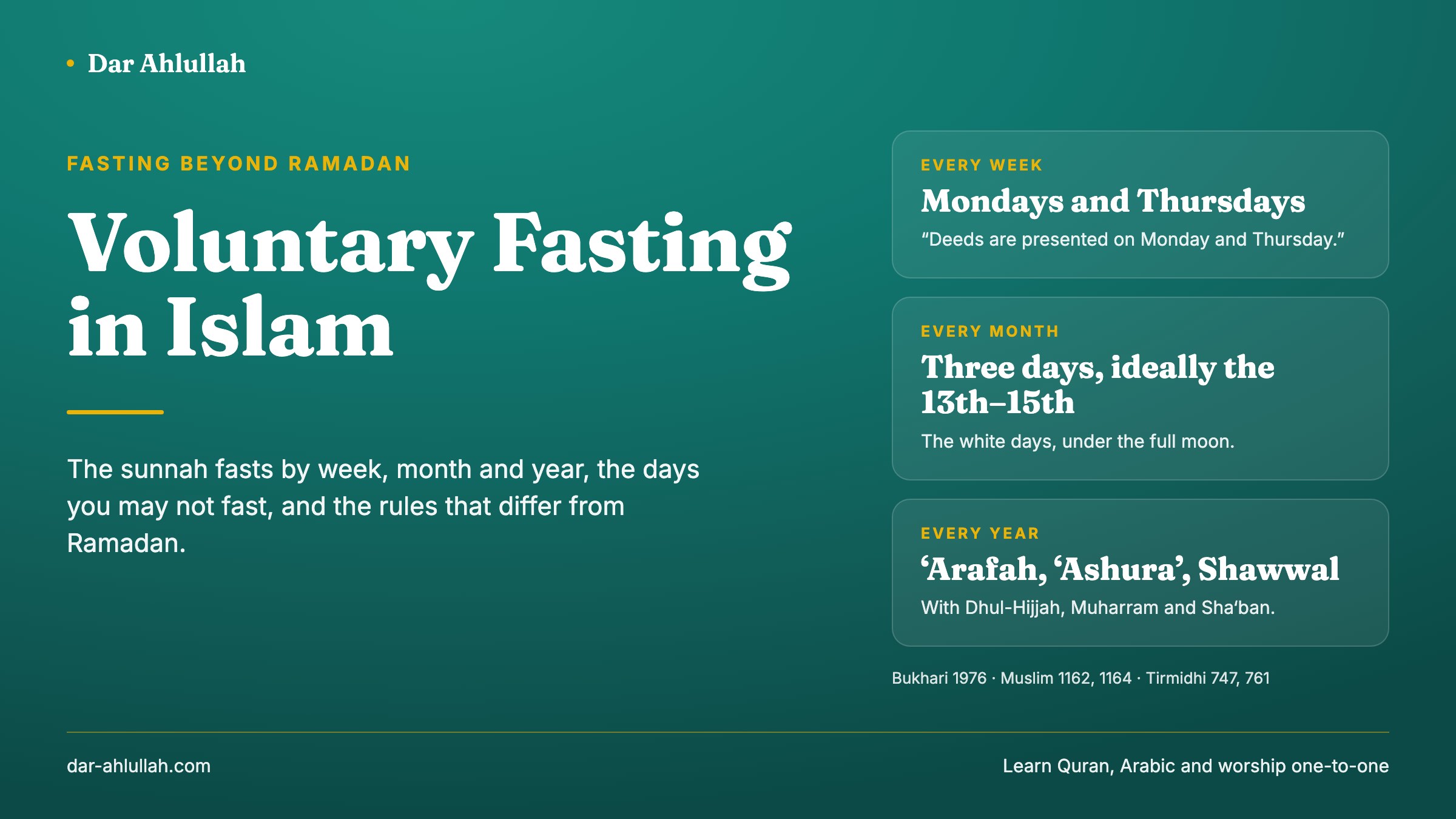
voluntary fasting in Islam

Voluntary Fasting in Islam: The Sunnah Fast Days and Their Rules

Voluntary fasting in Islam from the sound reports: the weekly, monthly and yearly sunnah fasts with the source and grade of each, the days you may not fast or should not single out, and the rules that differ from Ramadan, from a morning intention to breaking the fast and owing Ramadan days, with the schools where they differ.

28 min read
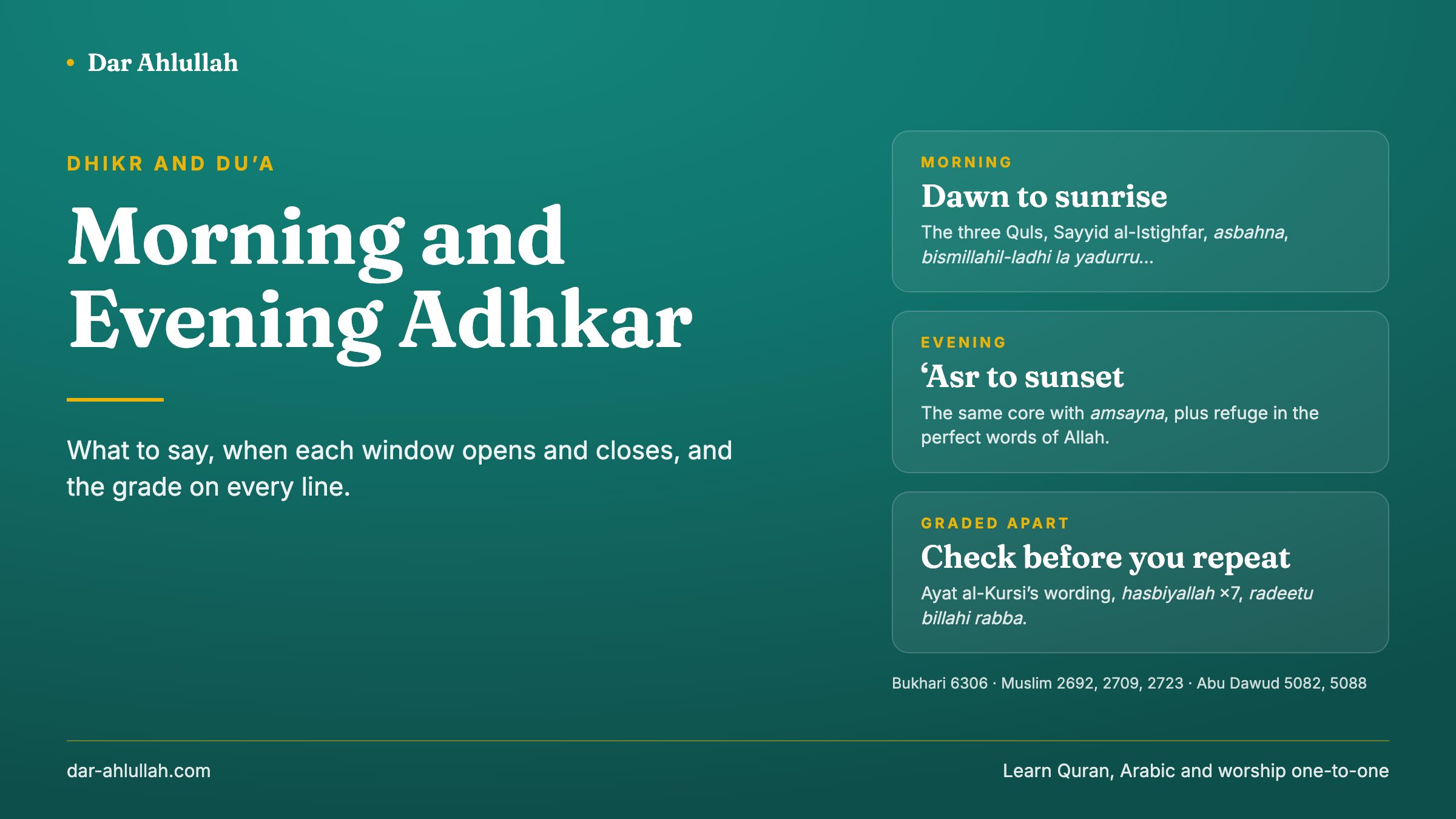
morning and evening adhkar

Morning and Evening Adhkar: What to Say and When

Morning and evening adhkar from the sound reports: the windows from dawn to sunrise and from 'Asr to sunset, the core set with the source and count of each line, and the grade printed on the popular additions the hadith scholars dispute, from Ayat al-Kursi to hasbiyallah seven times.

29 min read

how to respond to the adhan

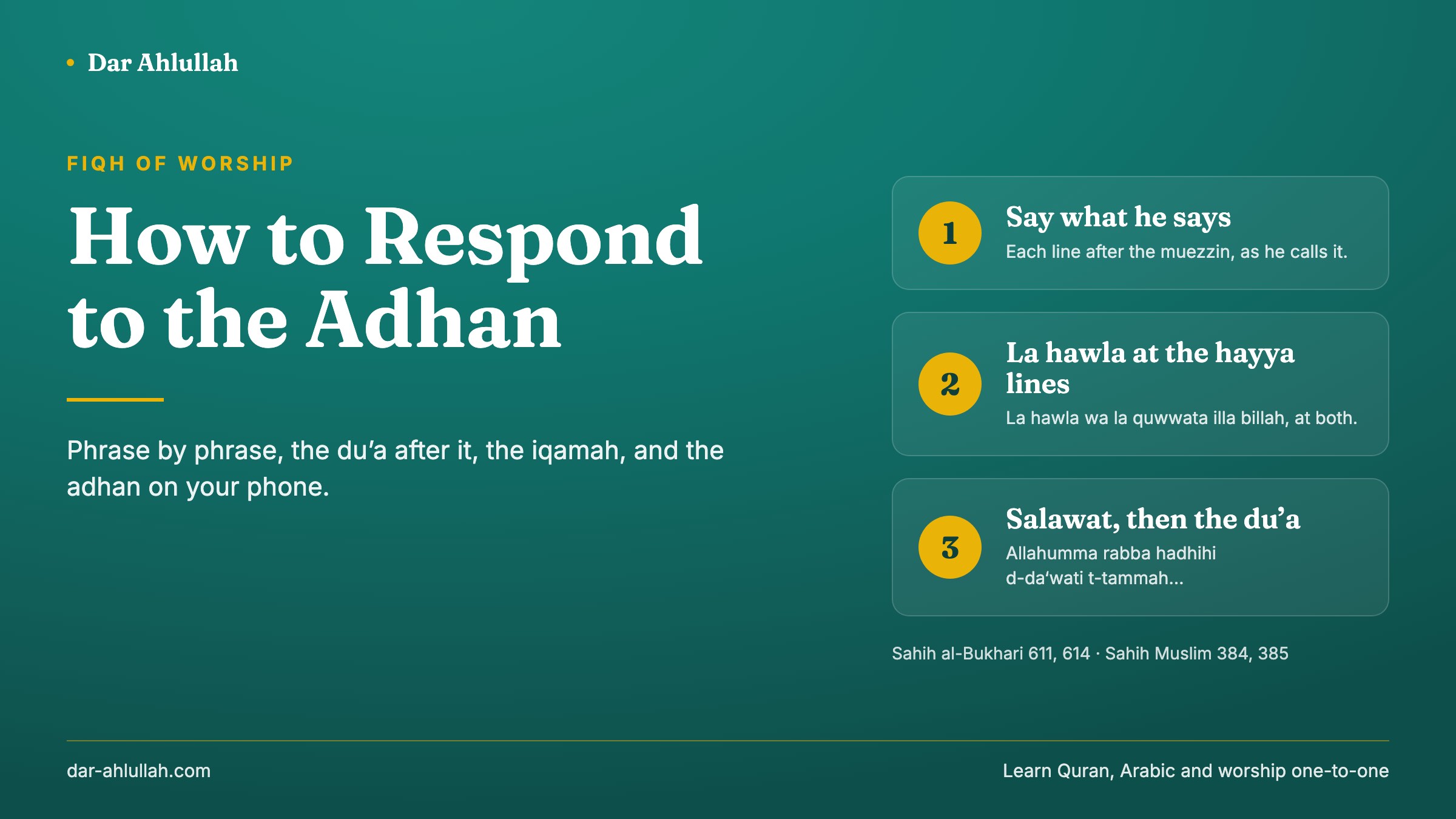
How to Respond to the Adhan: What to Say and the Dua After

How to respond to the adhan: repeat each phrase after the muezzin, say la hawla wa la quwwata illa billah at the two hayya lines, then send salawat and say the du'a after the adhan. This guide sets out every step from the sound reports, prints the grade on the additions people argue about, and lays out the two scholarly answers on the adhan from a phone app.

29 min read

how to perform ghusl

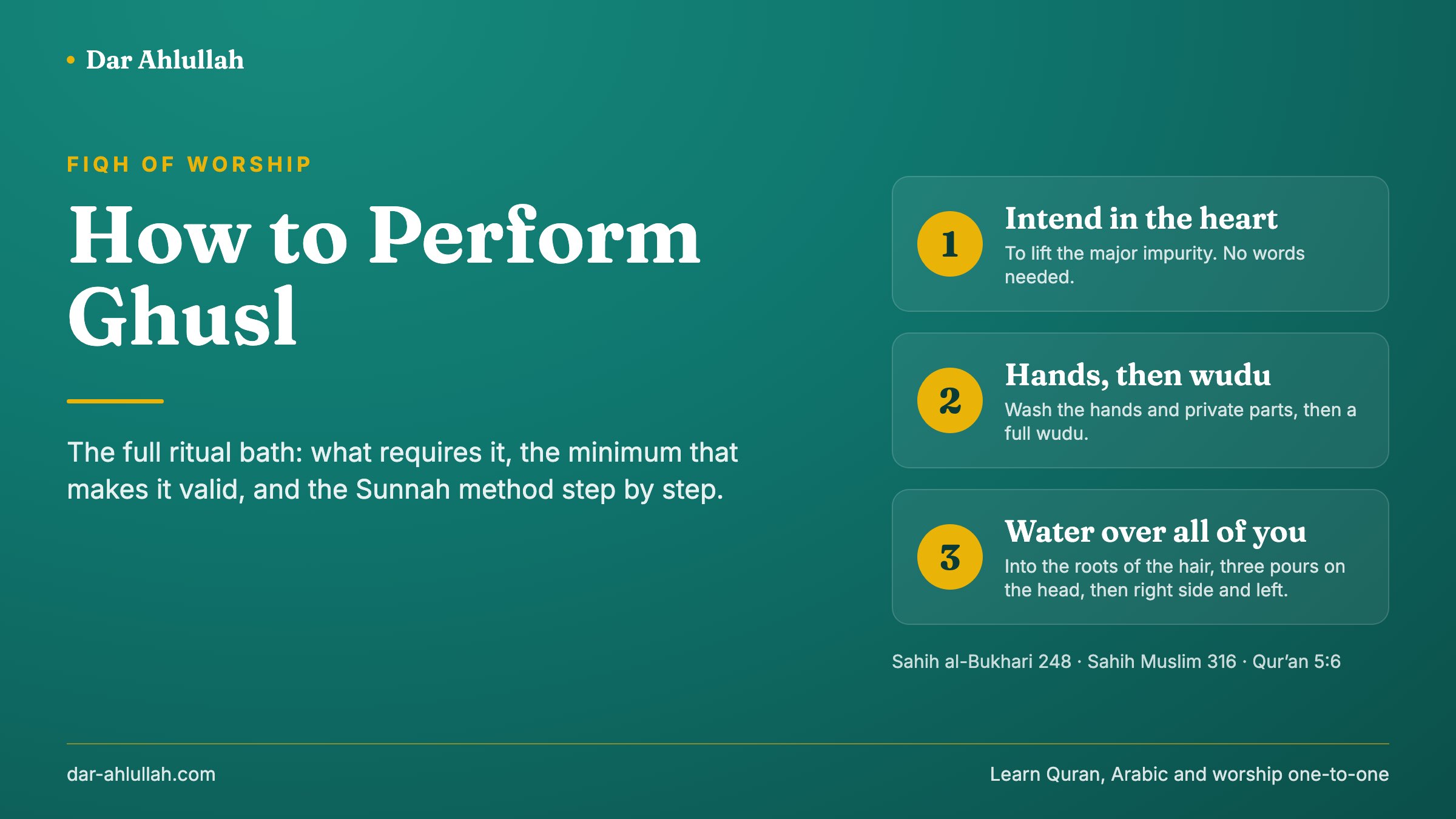
How to Perform Ghusl: The Full Ritual Bath, Step by Step

Ghusl is the full ritual bath, owed after intercourse, after any emission of sexual fluid, and at the end of menstruation and postnatal bleeding. Its real requirements are fewer than most people fear: an intention and water over the whole body, with two schools adding the mouth and nose and one adding rubbing. This guide sets out the minimum, the Sunnah method, where the four schools differ, and whether your morning shower can be your ghusl.

24 min read

khushu in salah

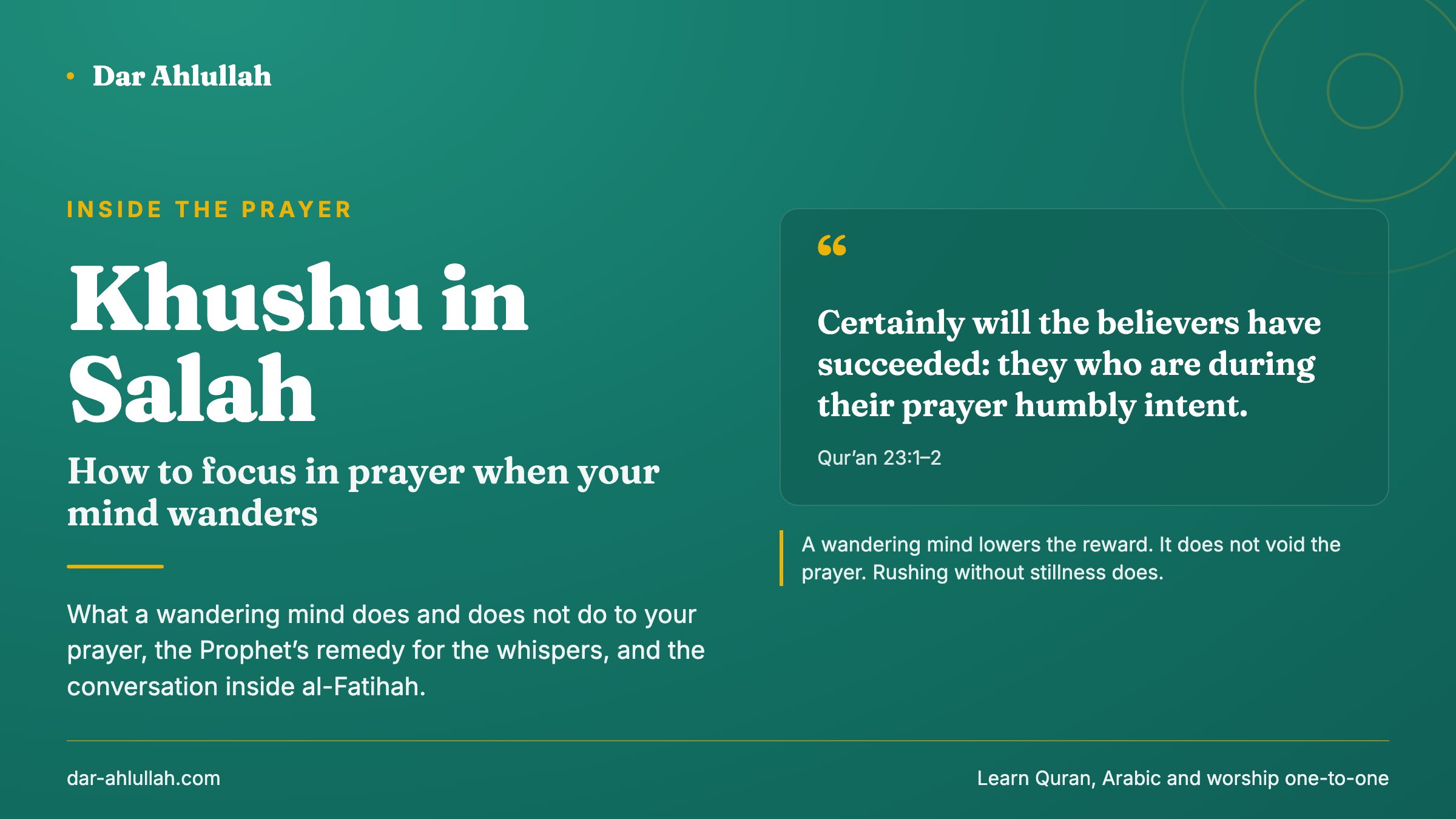
Khushu in Salah: How to Focus in Prayer When Your Mind Wanders

Khushu is stillness of the body and presence of the heart in prayer. What a wandering mind does and does not do to your salah, what the Sunnah gives you before the takbir, inside the prayer and when the whispers come, and how a non-Arabic speaker learns to mean the words.

26 min read

how to pray salat al-kusuf

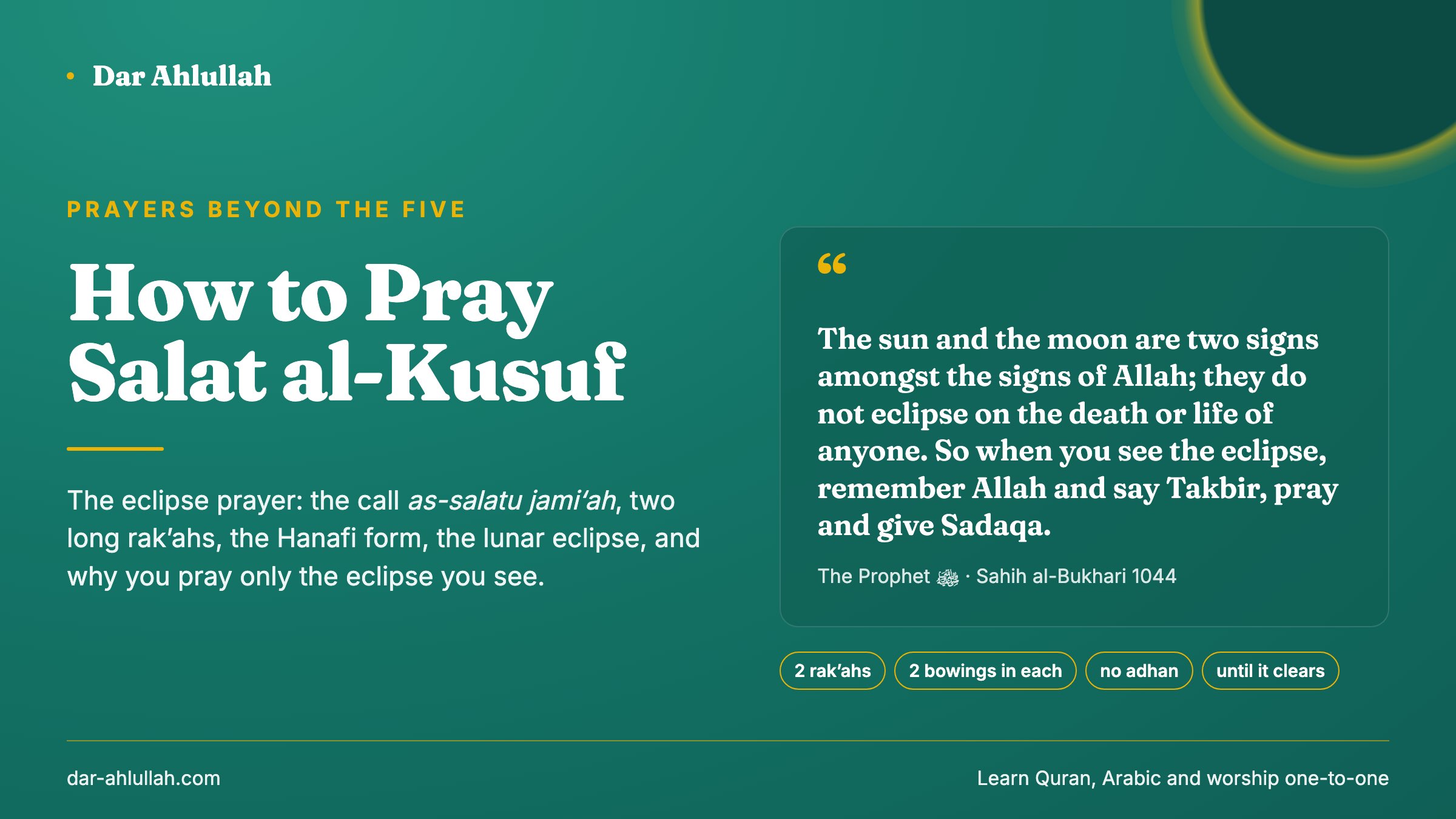
How to Pray Salat al-Kusuf: The Eclipse Prayer

Salat al-kusuf is the prayer Muslims pray when they see the sun or moon eclipsed: two long rak'ahs, with two bowings in each on the majority view and one in the Hanafi school. The method, the sighting rule, the lunar eclipse, the reports with their grades, and what to do when the eclipse and the prayer do not end together.

29 min read

how to pray salat al-istisqa

How to Pray Salat al-Istisqa: The Prayer for Rain

Salat al-istisqa is how Muslims ask Allah for rain in a drought: two rak'ahs in open ground, a khutbah of istighfar, raised hands and a turned cloak. The three forms, the method, where the four schools differ, the du'as with their grades, and what to say when the rain comes.

26 min read

how to pray salat al-tasbih

How to Pray Salat al-Tasbih: The Prayer of Glorification

Salat al-tasbih is four rak'ahs with one phrase of praise said 300 times, 75 in each rak'ah. The reports behind it and their grades, the scholars on both sides, the method position by position, the two reported orders of the counts, and what to do if you lose count.

22 min read

how to pray salat al-hajah

How to Pray Salat al-Hajah: The Prayer of Need

Salat al-hajah is two rak'ahs prayed when you need something, then asking Allah for it. The four reports behind it and their grades, the method step by step, du'as with sound chains, asking in English inside the prayer by school, and what to do when the answer is slow.

25 min read

sutrah

Sutrah in Prayer: What It Is and Who May Walk Past You

A sutrah is the barrier you pray behind. What counts as one, how close to stand, where you may walk past someone praying, who carries the sin when there is no way round, and what each school says about the hadith of the woman, the donkey and the black dog.

27 min read

tahiyyat al-masjid

Tahiyyat al-Masjid: How to Pray the Greeting of the Mosque

Tahiyyat al-masjid is two rak'ahs prayed on entering a mosque, before sitting. The method, the prayers that fulfil it for you, what to do if you already sat, the iqamah, the Friday khutbah and forbidden times by school, and whether a prayer room counts.

24 min read

how to pray salat al-tawbah

How to Pray Salat al-Tawbah: The Prayer of Repentance

Salat al-tawbah is two rak'ahs after a sin, taught in one sahih hadith. The method, what to say in sujud and after the salam, the forbidden-times question by school, praying it again after a relapse, sins against people, and what a new Muslim owes for the past.

25 min read

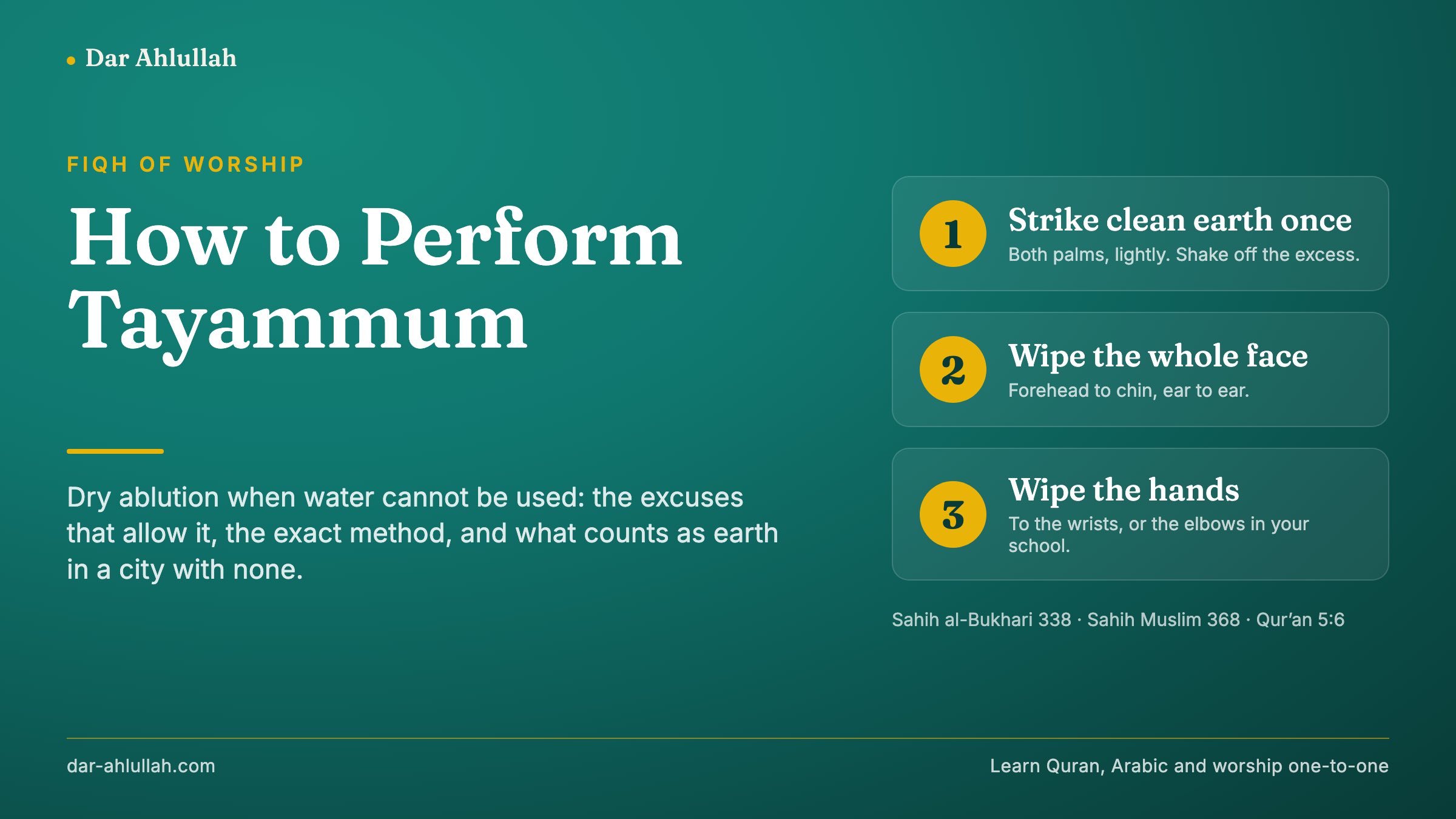
how to perform tayammum

How to Perform Tayammum: Dry Ablution When You Cannot Use Water

Tayammum is the purification you make with earth when water cannot be used. The rule is short: strike clean earth, wipe your face, wipe your hands. The difficulty for a Muslim in Europe or America is everything around the rule: what counts as a real excuse, what counts as earth in a building with none, how long it lasts, and what you do on a plane or in a hospital bed when there is neither water nor dust.

28 min read
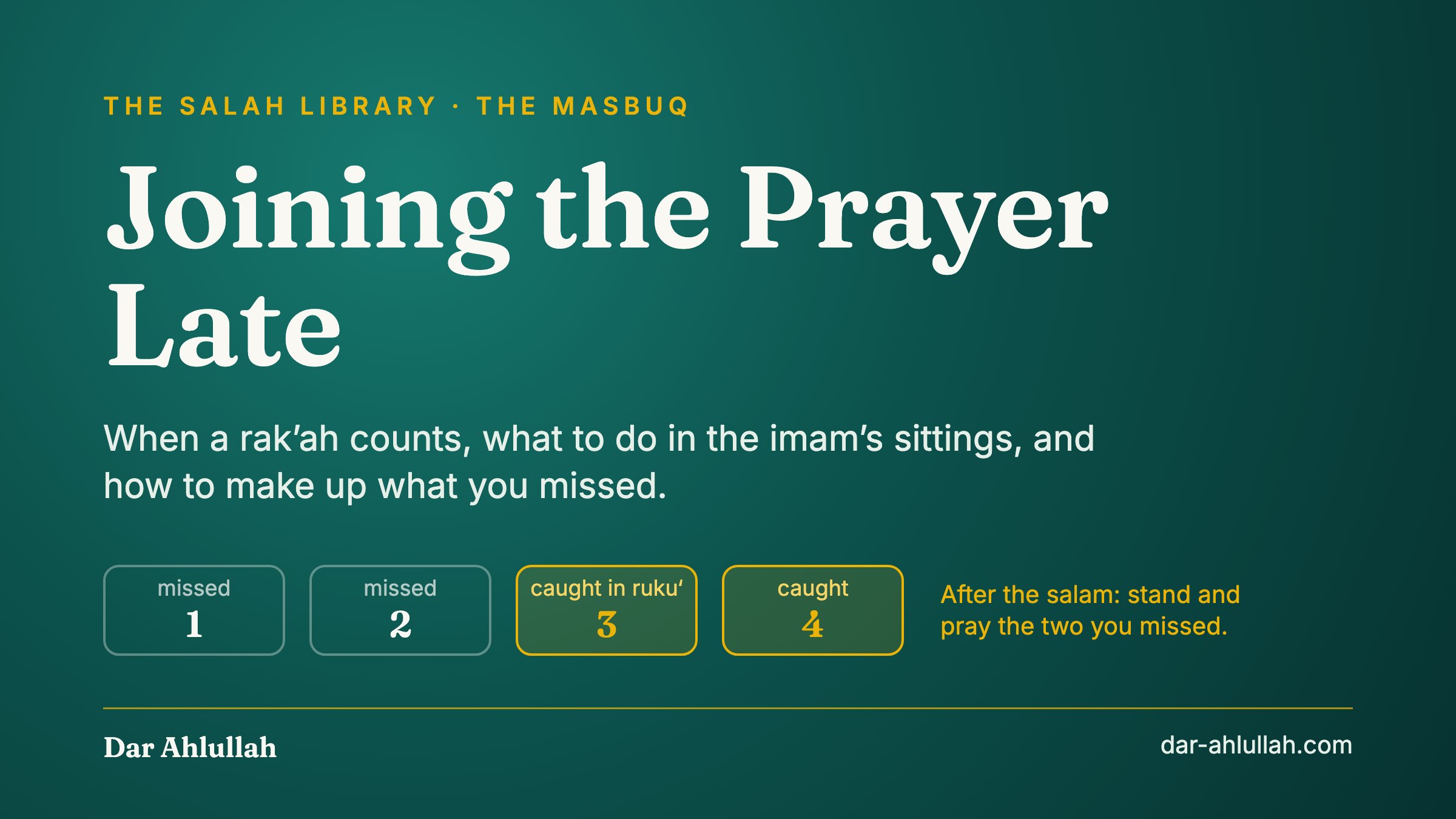
joining the prayer late

Joining the Prayer Late: How to Make Up Missed Rak’ahs

Joining the prayer late has a short, exact procedure: say the takbir standing, join the imam wherever he is, count the rak'ah only if you reached ruku' before he rose, and complete what you missed after his salam. This guide works through every prayer and arrival point, and explains why the person beside you may make up the same rak'ahs with a different recitation.

20 min read

online Quran classes vs private tutor

Online Quran Classes vs a Private Tutor at Home: Which Is Better?

Both are one-to-one, so airtime does not decide it. What does: who the teacher can be, what the hour really costs, what happens when the tutor moves, who is responsible for safeguarding, and whether the learner is old enough for a screen.

19 min read

are online Quran classes worth it

Are Online Quran Classes Worth It? An Honest Answer

Online Quran classes are worth paying for when the learner needs a human ear, has no good local option, and lives in a household that will keep the slot. Here are the five cases where they are, the five where they are not, the maths on a year, and a six-week test that settles it.

20 min read

adhkar after salah

Adhkar After Salah: What to Say After Every Prayer

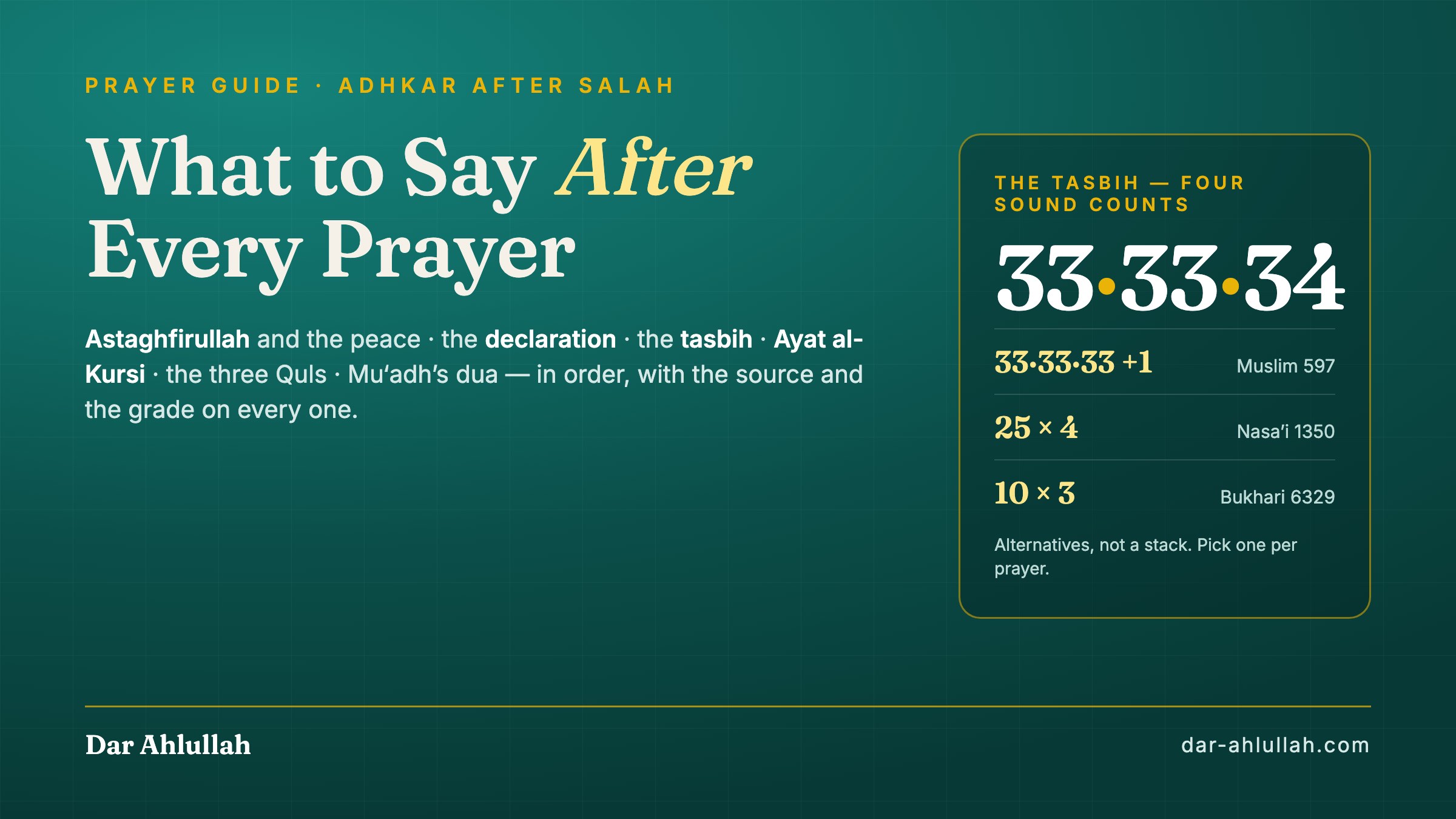
The adhkar after salah are the remembrances said in the minutes after the salam. This guide gives them in order with their sources, sets the 33-33-34, 33-33-33, 25-by-four and 10-by-three reports side by side so the counts stop looking like a contradiction, prints the grade on every famous reward, and works out which to keep when you pray Zuhr in a stairwell at work.

34 min read

sunnah rawatib

The Sunnah Rawatib: The Twelve Rak’ahs Around the Five Prayers

The sunnah rawatib are the regular voluntary rak’ahs attached to the five daily prayers: twelve in a day on the fullest count, ten on the other. Which goes before and which after, why the two counts differ, what each school holds, where to pray them, how to make one up, and which to keep when you only have five minutes.

27 min read

sujood ash-shukr

Sujood ash-Shukr: The Prostration of Gratitude

Sujood ash-shukr is the single prostration a Muslim makes when good news arrives or a harm is lifted. What actually triggers it, why the four schools do not agree on its status, whether you need wudu, how to perform it, what to say, and the answers for an exam result, a hospital corridor and an office desk.

25 min read

sajdah tilawah

Sajdah Tilawah: What to Do at a Prostration Verse

Sajdah tilawah is the single prostration that belongs to reciting or hearing one of the Qur'an's verses of prostration. Where those verses are, why the four schools count fourteen, fifteen and eleven of them, how to perform it, and the answers for a desk, a recitation app, a live lesson and a hifz drill.

26 min read

how to pray duha

How to Pray Duha: The Prayer Between Sunrise and Noon

Duha is a voluntary prayer of the forenoon: two rak'ahs or more, any time between the end of sunrise and just before midday. The window and how to compute it where you live, the rak'ah counts, the contradiction in the hadith resolved, and the grade on every reward you have been quoted.

22 min read

how to pray salat al-janazah

How to Pray Salat al-Janazah: The Funeral Prayer

Salat al-Janazah is four takbirs said standing, with no bowing and no prostration. What you recite after each one, the full supplication for the deceased, what changes for a child, and what to do when you arrive late or missed it entirely.

21 min read

how to pray istikhara

How to Pray Istikhara: The Prayer Before a Decision

Istikhara is two rak'ahs and a supplication, prayed at any valid time about a real fork in the road. The full du'a, what the answer actually looks like, why the dream is a myth, and what to do when nothing becomes clear.

23 min read

how to pray tahajjud

How to Pray Tahajjud: The Night Prayer, Step by Step

Tahajjud is voluntary, prayed in pairs between Isha and Fajr and closed with Witr. When the window opens, how many rak'ahs, what to recite when you know only short surahs, and what the Sunnah does on the nights you sleep through it.

21 min read

how to pray Jumuah

How to Pray Jumu'ah: The Friday Prayer, Start to Finish

Jumu'ah replaces Dhuhr, not adds to it: two rak'ahs, a khutbah you sit silent through, and a congregation. Who it is owed by, what still counts if you walk in late, and what to do when the sermon is in a language you do not speak.

18 min read
prayer times at high latitude

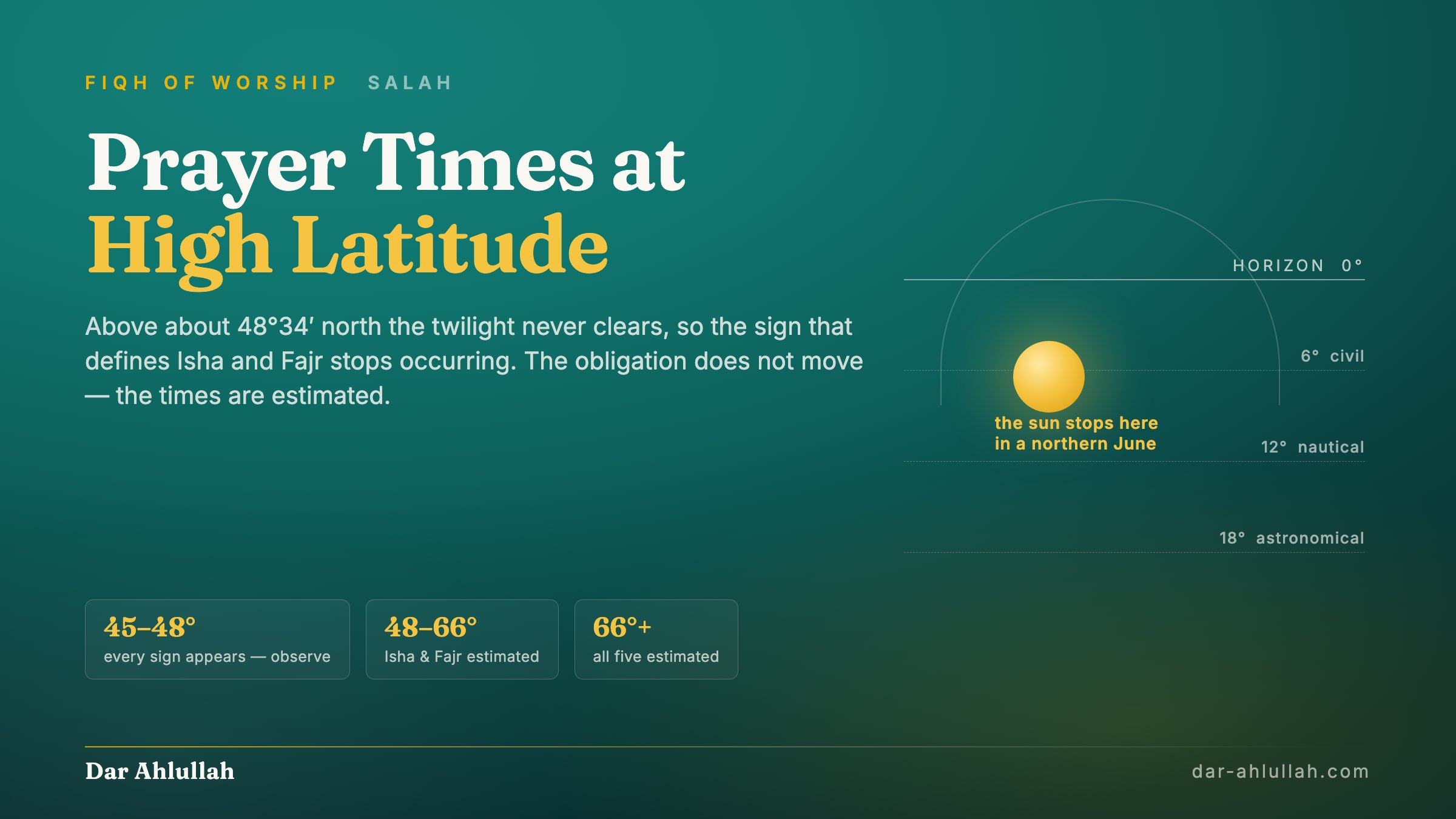
Prayer Times at High Latitude: Isha and Fajr in the Northern Summer

Above roughly 48 degrees north the twilight never clears in June, so the sign that defines Isha and Fajr stops occurring. The obligation does not move — the times are estimated, by one of four recognised methods, and your prayer app has already picked one.

20 min read
what invalidates salah

What Invalidates Salah: The Things That Really Break Your Prayer

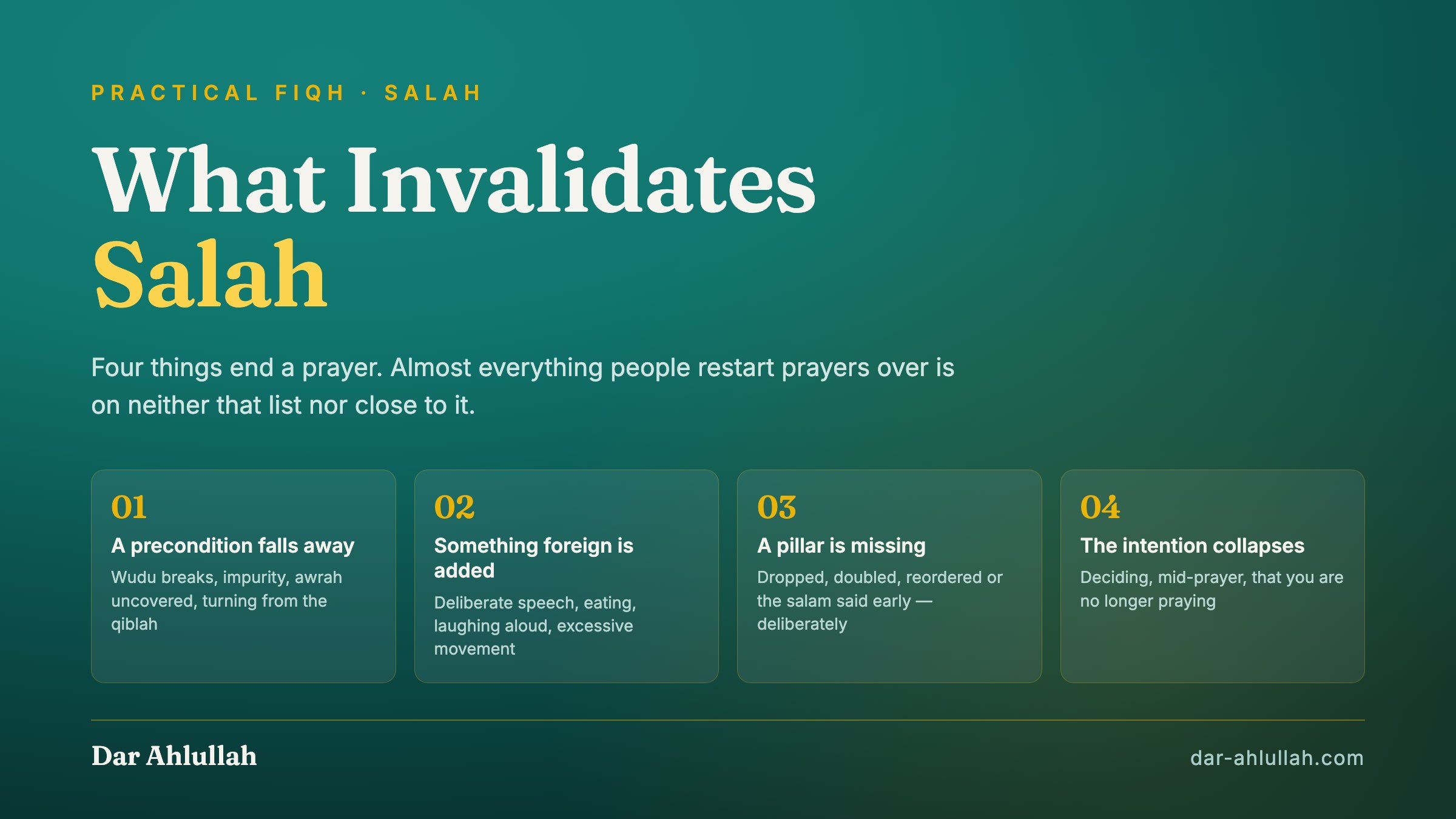
Four things end a prayer: a precondition falls away, something foreign is added, a structural part is deliberately dropped, or the intention is withdrawn. Almost everything else people restart prayers over is on neither that list nor close to it.

19 min read
child refuses to learn Quran

What to Do When Your Child Refuses to Learn Quran

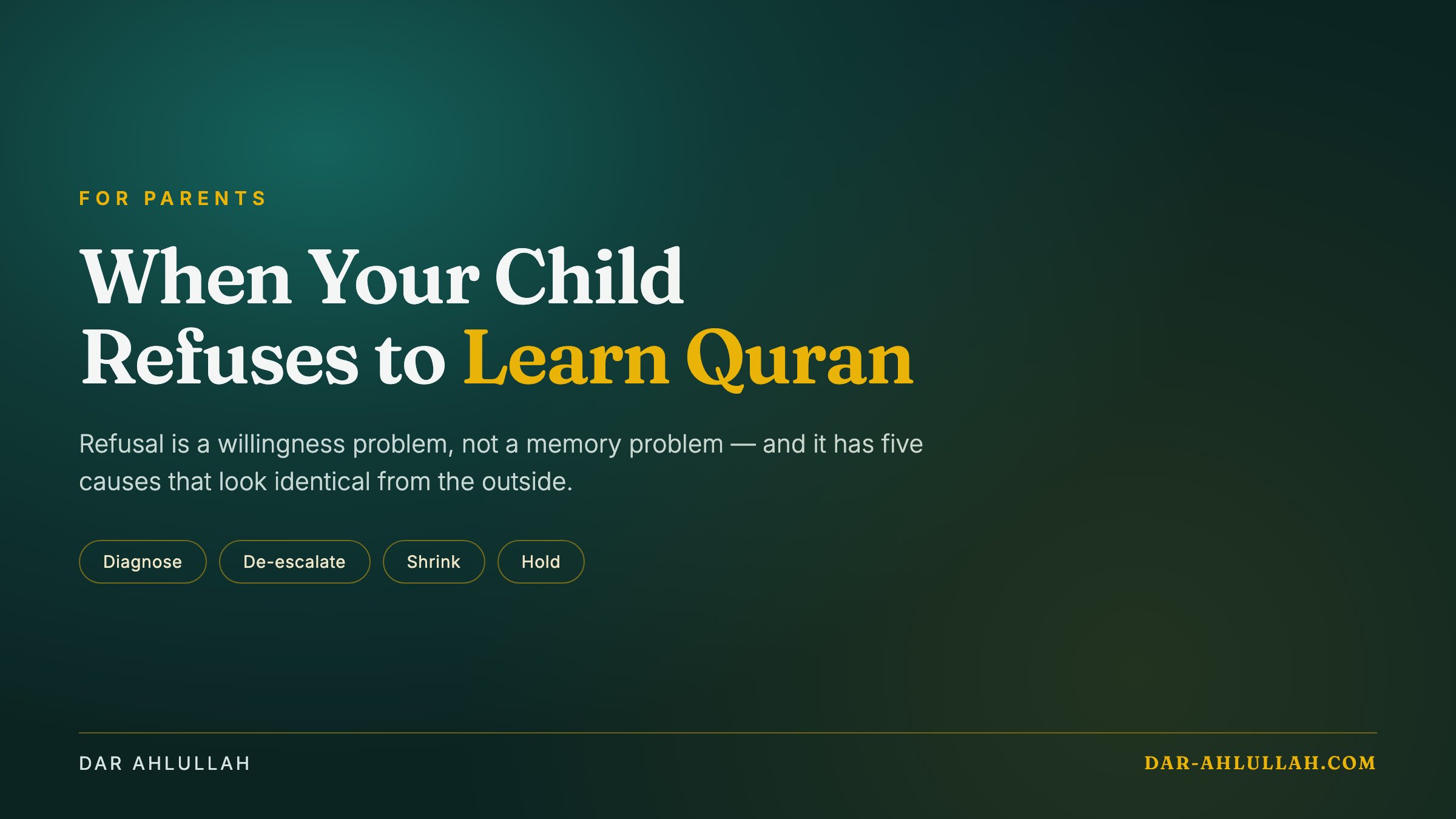
Refusal is a willingness problem, not a memory problem, and it has five causes that look identical from the outside. Tell them apart first — the fix for each one is different.

15 min read
what to say in salah

What to Say in Salah: Every Word of the Prayer, in Order

Most guides to prayer teach the postures and only name the words. This one teaches the words: what you say at every position, what it means, where it comes from, and which parts are pillars, which are obligatory, and which are simply recommended.

19 min read
what breaks wudu

What Breaks Wudu? The Agreed List and the Disputed

Three things break wudu by the agreement of all four schools. Four more are genuinely disputed, and your answer depends on which school you follow. Almost everything else people worry about — food, dirt, a nosebleed, a doubt — does not break it at all.

19 min read
how to make up missed prayers

How to Make Up Missed Prayers (Qada Salah)

Most people arrive at this question carrying a rough, unwelcome number. Here is what qada actually means, which missed prayers are owed and which never were, the order to pray them in, and how to clear a backlog that runs into years.

19 min read
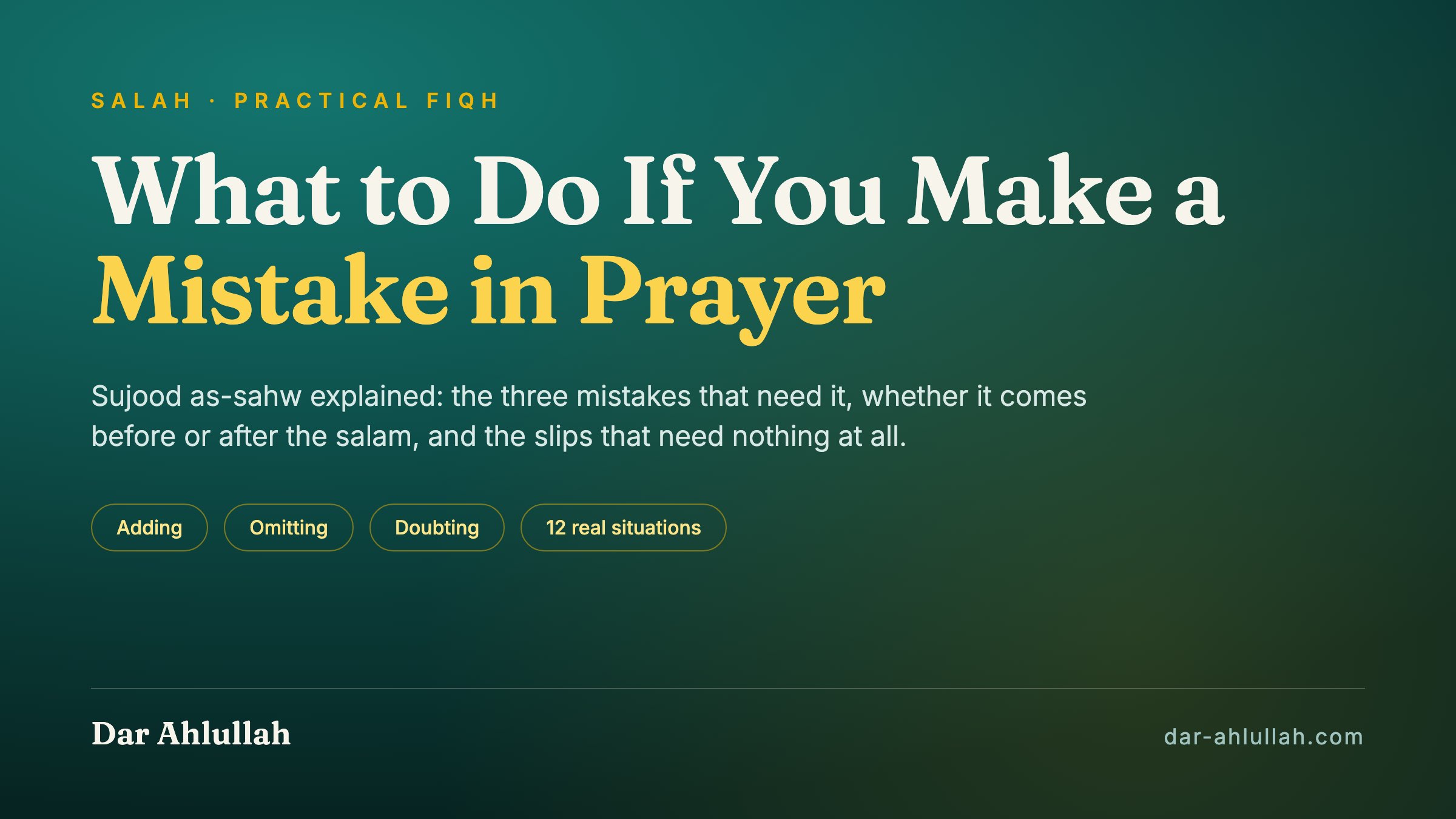
what to do if you make a mistake in prayer

What to Do If You Make a Mistake in Prayer (Sujood as-Sahw)

Most mistakes in salah do not require you to start again. Three things trigger the prostration of forgetfulness — adding, omitting, doubting — and which side of the salam it falls on depends on which one you did.

18 min read
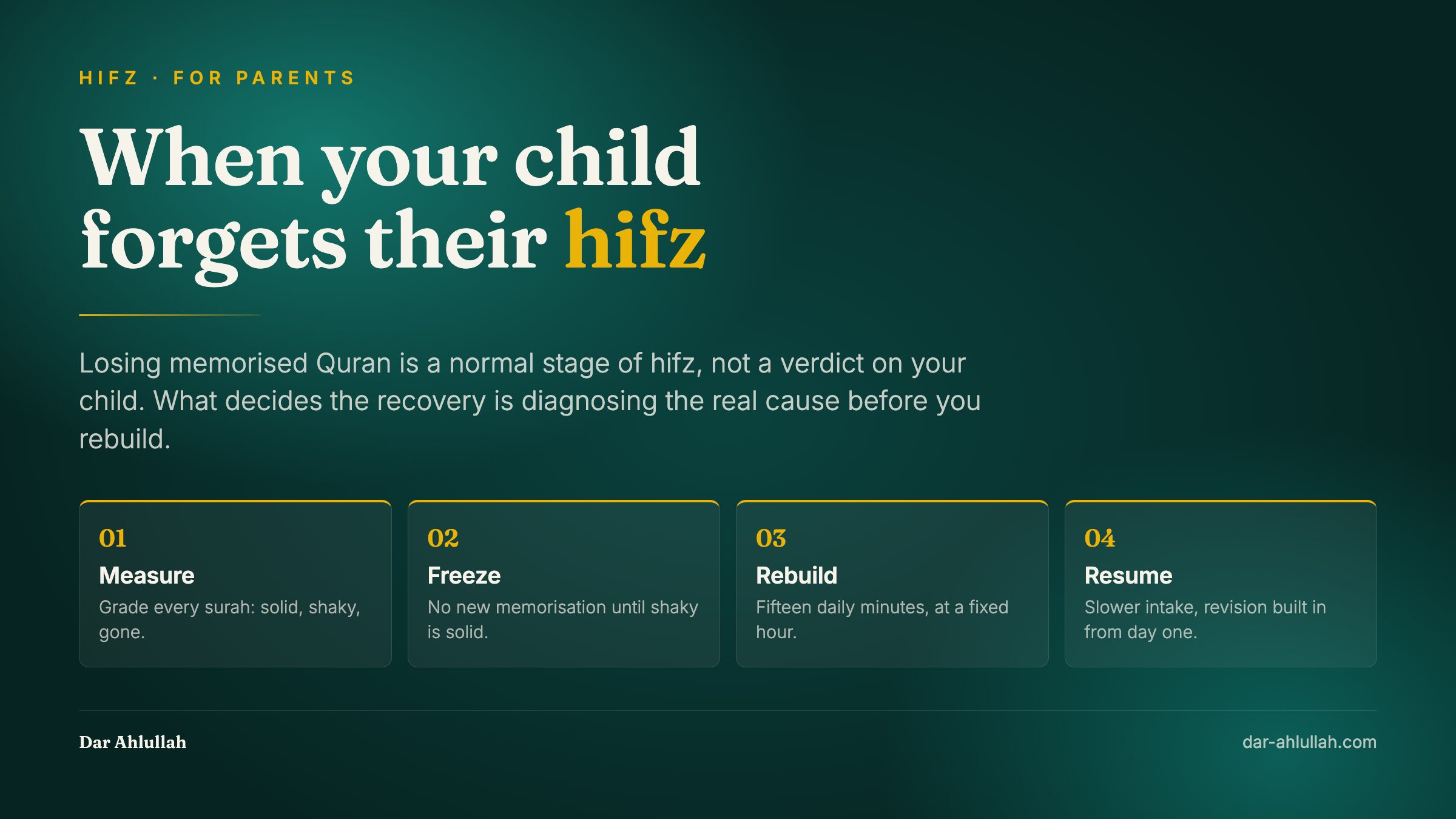
how to help a child who forgot Quran memorization

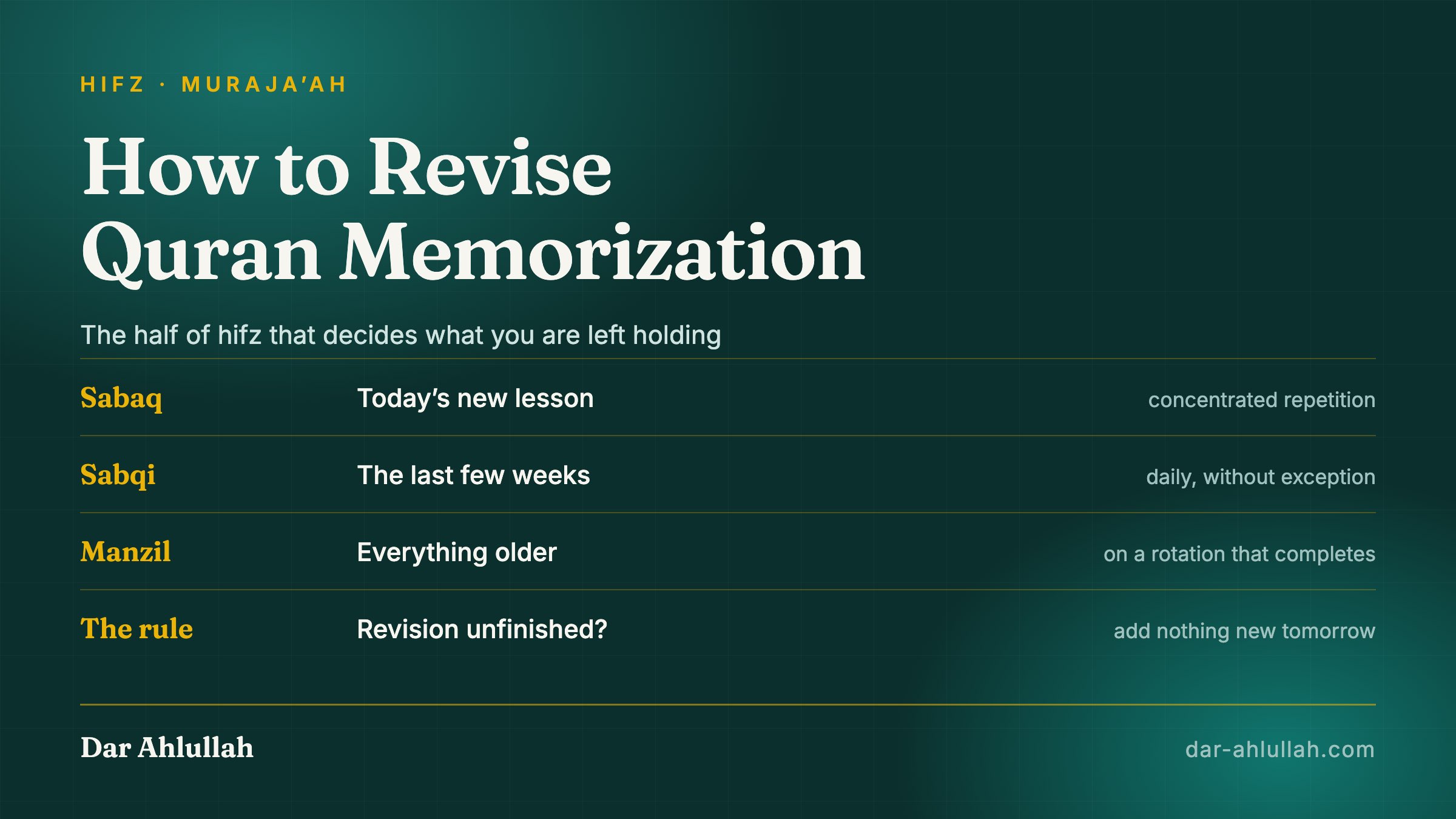
What to Do When Your Child Forgets Their Quran Memorization

Losing memorised Quran is a normal stage of hifz, not a verdict on your child. What decides the recovery is finding the real cause first, then freezing new material while the old is rebuilt.

22 min read
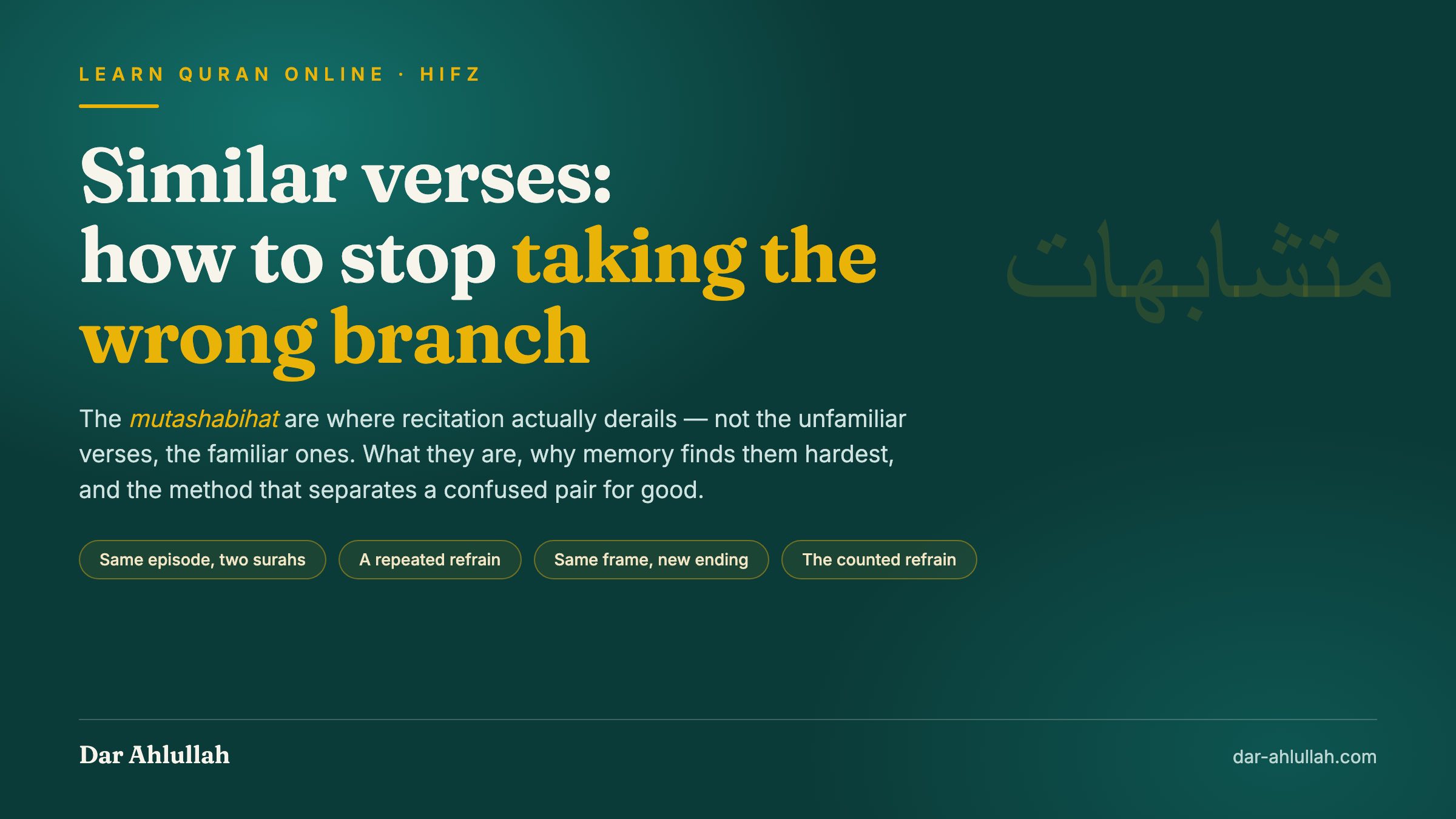
how to memorize similar verses in the Quran

How to Memorize Similar Verses in the Quran (Mutashabihat)

The places where recitation derails are not the unfamiliar verses. They are the familiar ones — the passages that resemble each other so closely that memory takes the wrong branch.

17 min read
which surahs to memorize first

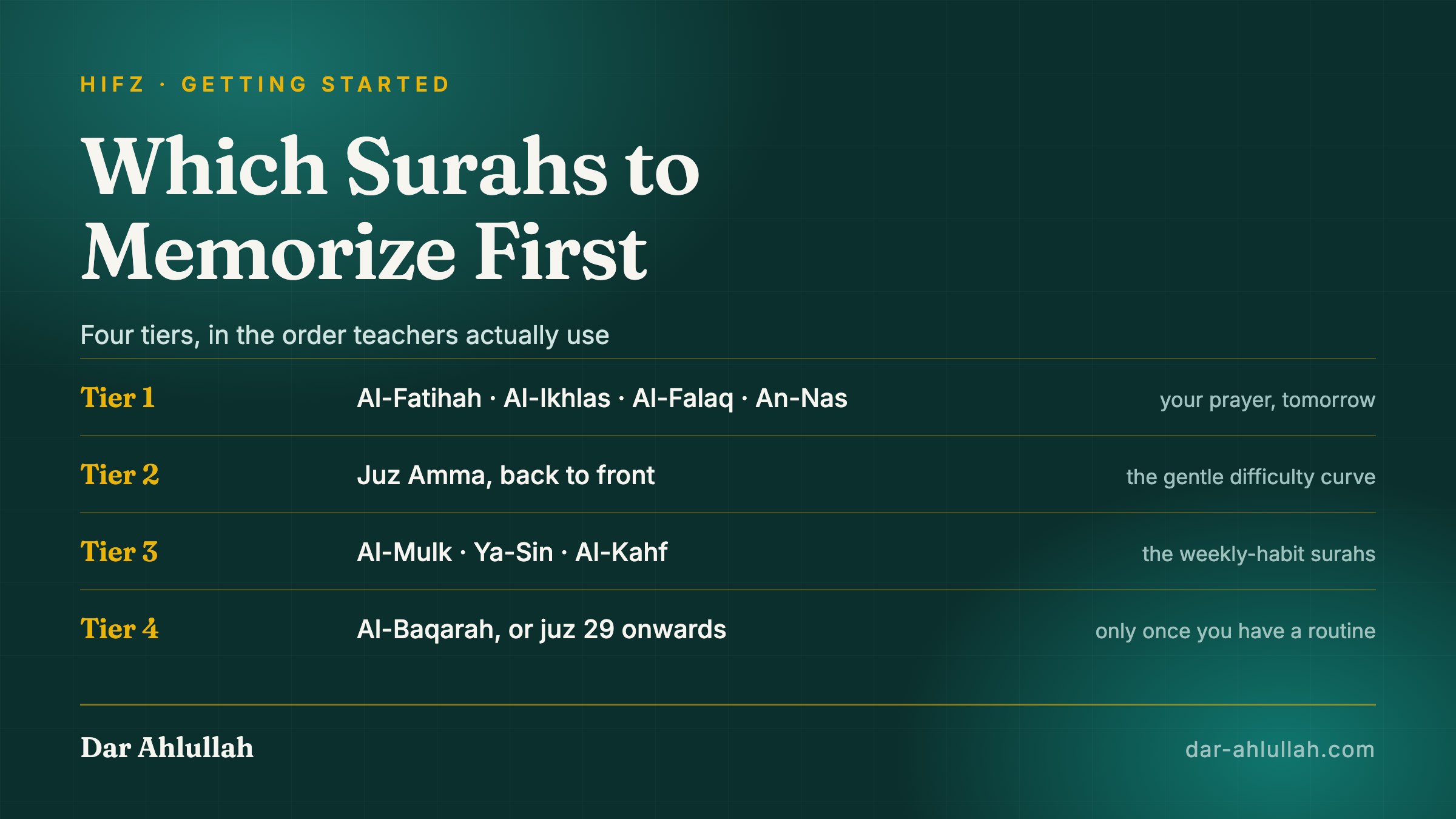
Which Surahs to Memorize First: A Practical Order

Almost nobody asking which surahs to memorize first is really asking about surahs. Here is the order teachers actually use, the reason behind each step, and the point where beginners lose a year.

15 min read

how long does it take to learn to read the Quran

How Long Does It Take to Learn to Read the Quran? An Honest Answer

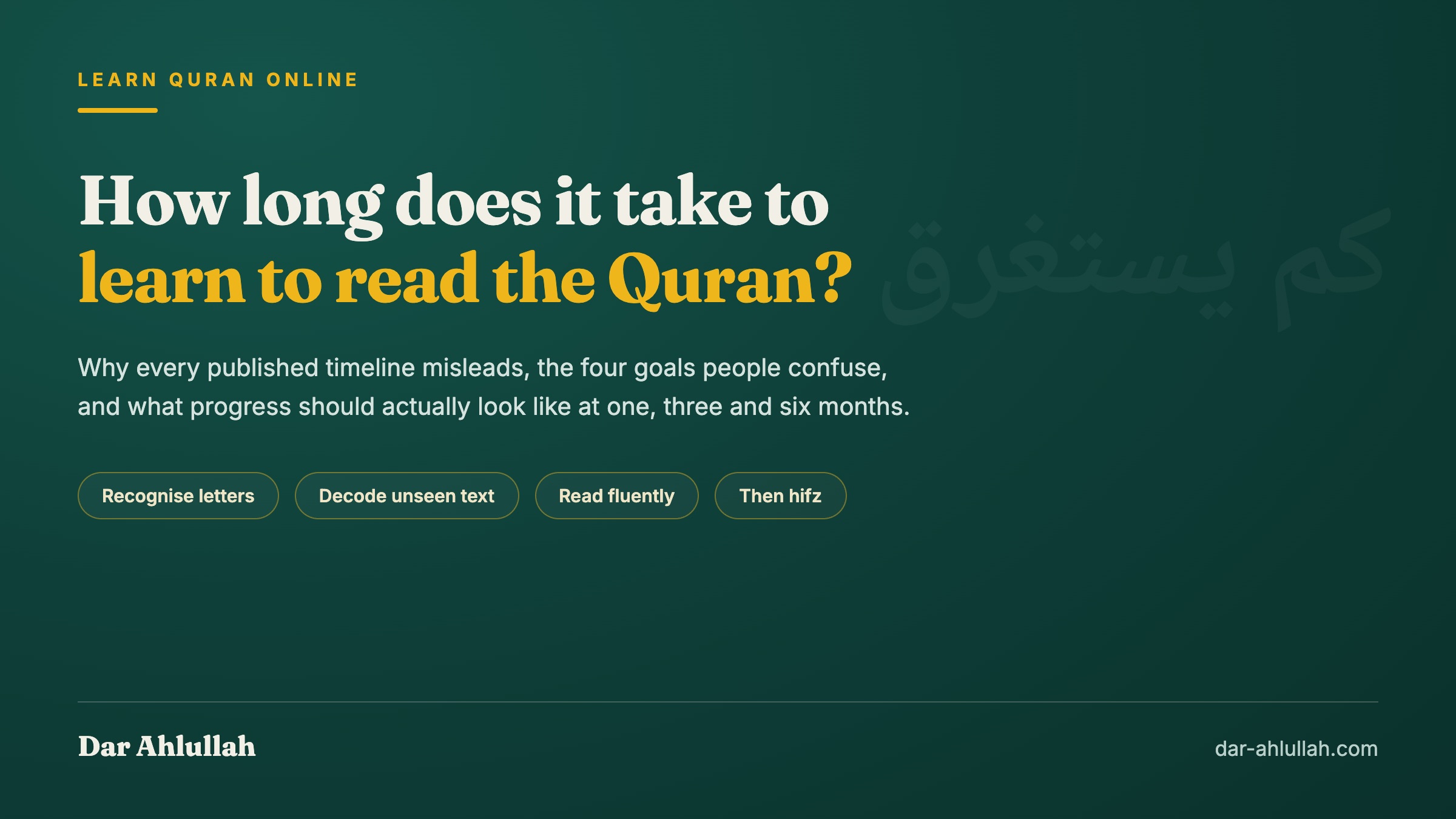
Every academy quotes a different number and none of them say what they are measuring. Here is the honest version: four different goals people confuse, the hours each one really costs, what those hours look like at two versus four lessons a week, and the specific habits that stretch a four-month job into two years.

19 min read

online Quran classes

Online Quran Classes vs Masjid Classes: An Honest Comparison

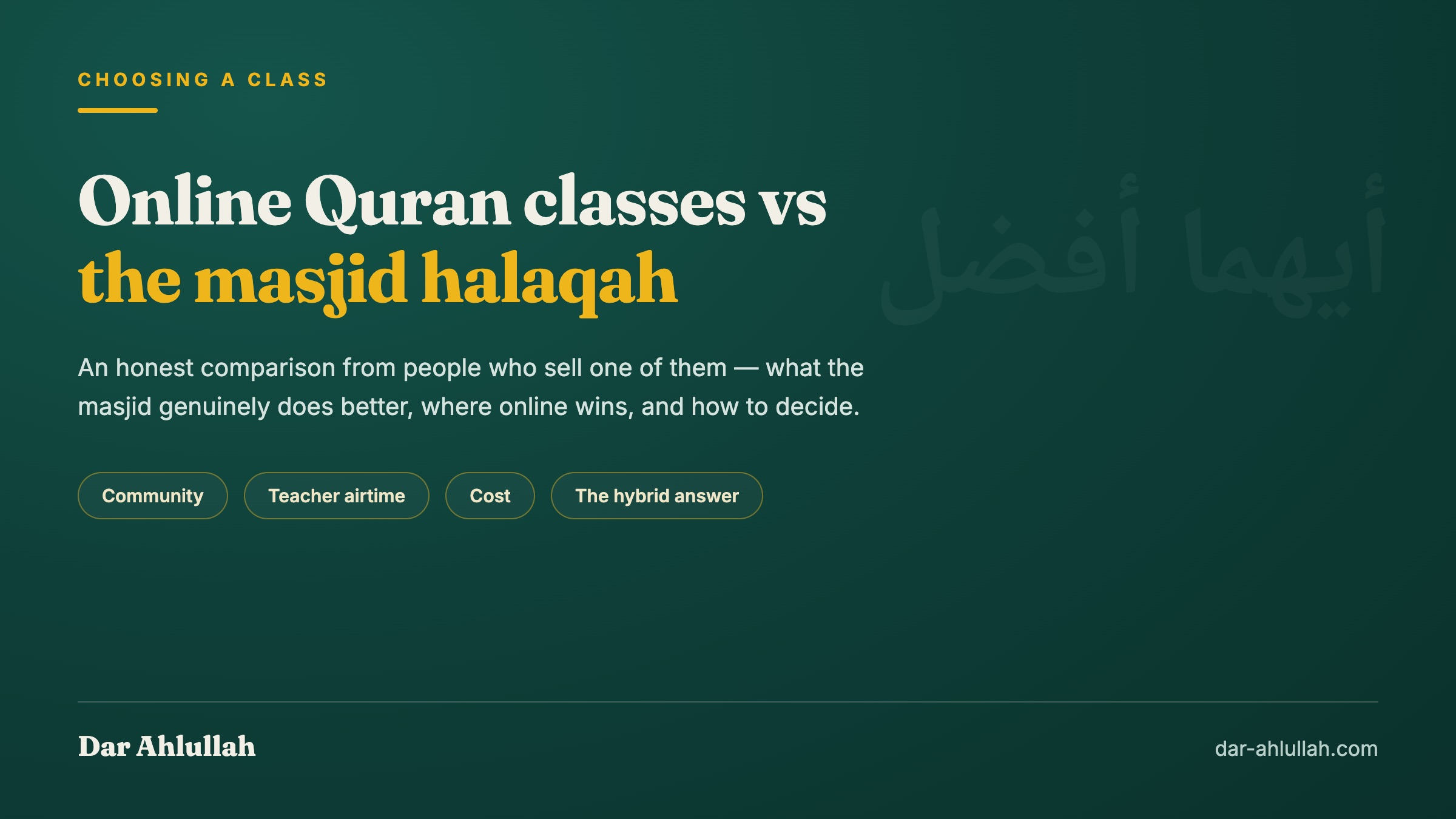
We teach online, so read this knowing that. The masjid gives your child a community, a room full of peers and a cost of nearly nothing. Online gives one thing the masjid structurally cannot: the teacher’s ear for a full hour. Here is the real comparison, including where each one fails.

21 min read

what age should a child start learning Quran

What Age Should a Child Start Learning Quran? Readiness, Not Birthdays

There is no age on the calendar that makes a child ready, and the number you are looking for does not exist. Here are the readiness signals that actually matter, what each age band can realistically do, why starting formal lessons too early costs years, and the honest answer to whether you have left it too late.

19 min read

Noorani Qaida

Noorani Qaida: What It Is and How to Actually Finish It

Every Quran teacher says “we will start with the Qaida” as if you already know what that means. Here is what the book is, what each block of lessons trains, why the order is not negotiable, and the five habits that leave people stuck on page nine.

20 min read

how to read the Quran for beginners

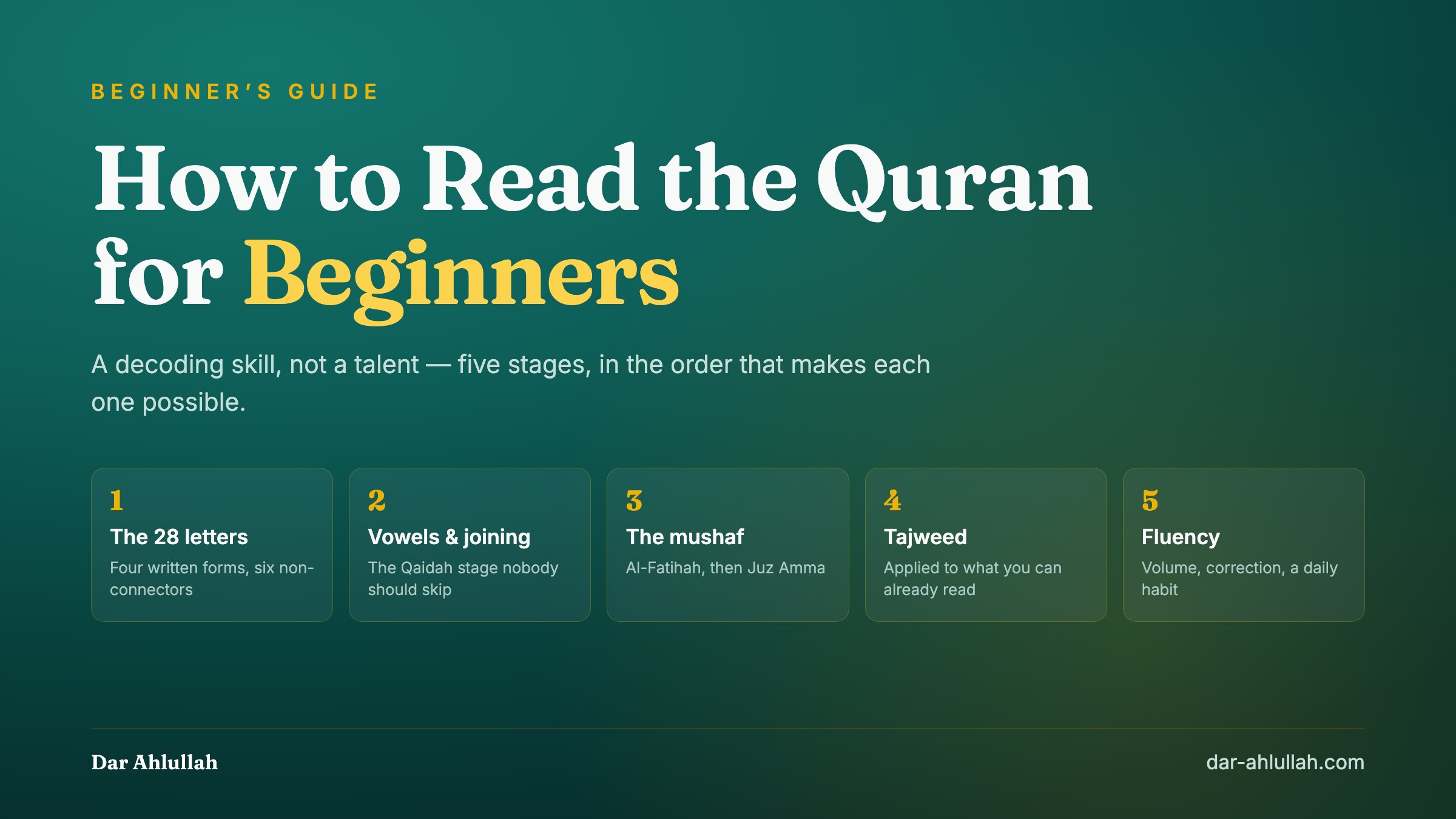
How to Read the Quran for Beginners: A Step-by-Step Route

Reading the Quran is a decoding skill, not a talent — and almost every beginner who stalls stalled on the order, not the difficulty. Here are the five stages, what marks the end of each, and why the Qaidah is the one nobody should skip.

20 min read

how to improve Arabic speaking skills

How to Improve Your Arabic Speaking Skills as an Adult

You can read Arabic fluently and still freeze when someone speaks to you. Reading is recognition; speaking is retrieval, and they are trained separately. Here is which Arabic to speak, and the five drills that work with nobody else in the room.

16 min read

Arabic alphabet for beginners

Arabic Alphabet for Beginners: How to Read the Script

An alphabet chart shows you 28 isolated shapes. A page of Arabic shows you the same letters joined, compressed and stripped of their vowels. This is the route across that gap — shape families, four forms, six non-connectors and the marks that make a word readable.

17 min read

how to study the Seerah

How to Study the Seerah: A Beginner’s Reading Plan

Most people stall in the first four chapters of a Seerah book because they started with the flesh instead of the skeleton. Thirteen years in Mecca, ten in Medina, one book finished properly, and the Quran open beside it.

18 min read

fiqh for beginners

Fiqh for Beginners: What to Learn First, and in What Order

Fiqh is the science of what a Muslim does, as distinct from what a Muslim believes. The part you use daily — purification and prayer — is a few weeks of study, and it is taught in a fixed order for a reason.

16 min read

aqeedah for beginners

Aqeedah for Beginners: The Six Articles of Faith, Explained Simply

Aqeedah is the subject that answers what a Muslim believes, as distinct from what a Muslim does. The core of it is six articles of faith — short enough to learn in an afternoon, and the foundation everything else rests on.

17 min read

Islamic homeschooling

Islamic Homeschooling: A Realistic Guide for Families in the West

Most Islamic homeschooling guides assume you live somewhere it is legal and have a parent free all day. This one starts from the reality: the law in your country, the hours you actually have, and which subjects genuinely need a teacher.

14 min read

Tajweed rules for beginners

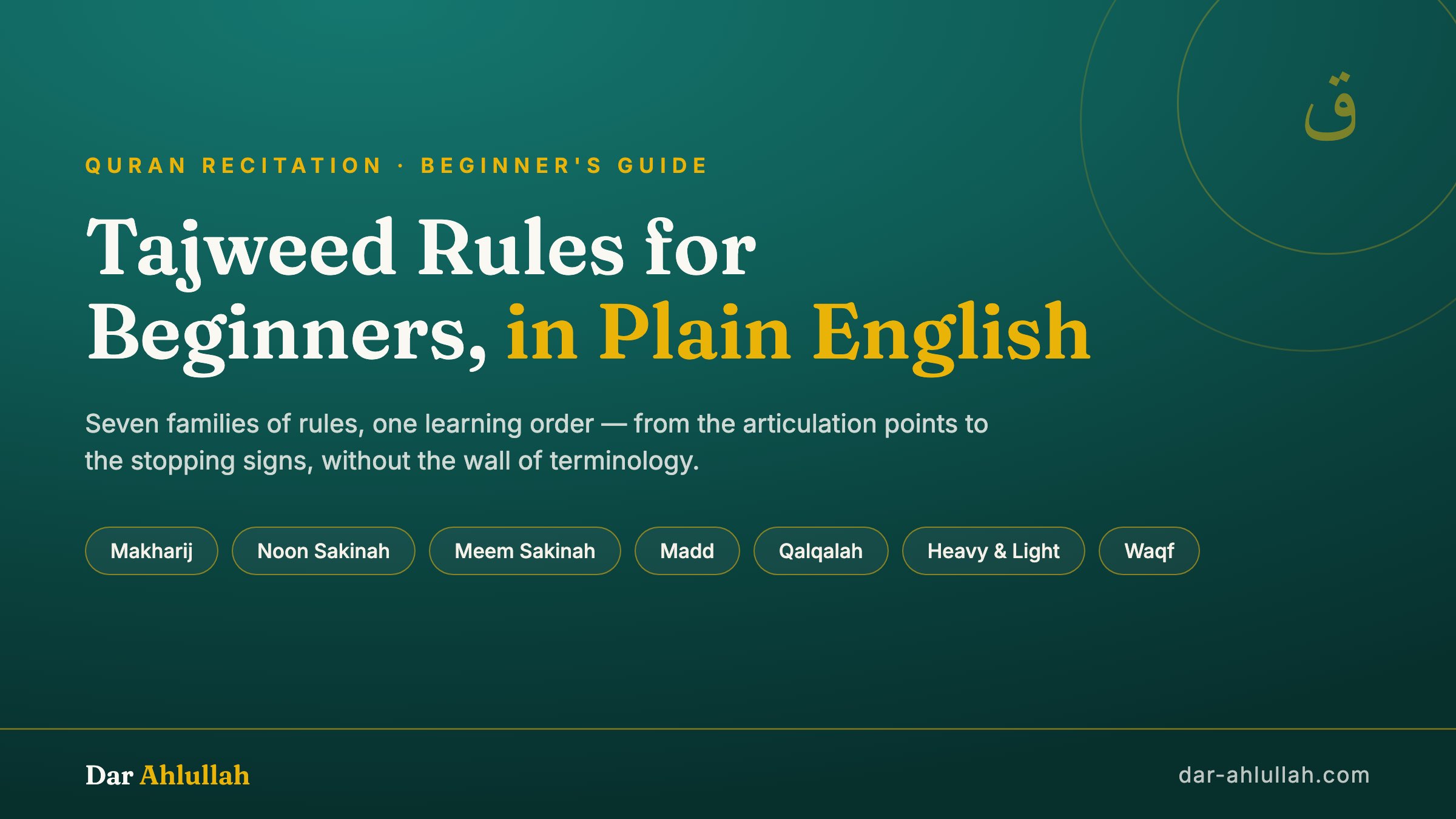
Tajweed Rules for Beginners: A Plain-English Guide

Tajweed looks like a wall of Arabic terminology, but it is really seven families of rules, and they have a natural learning order. This guide walks through each family in plain English and explains which mistakes are worth fixing first.

14 min read

how to teach your child Arabic at home

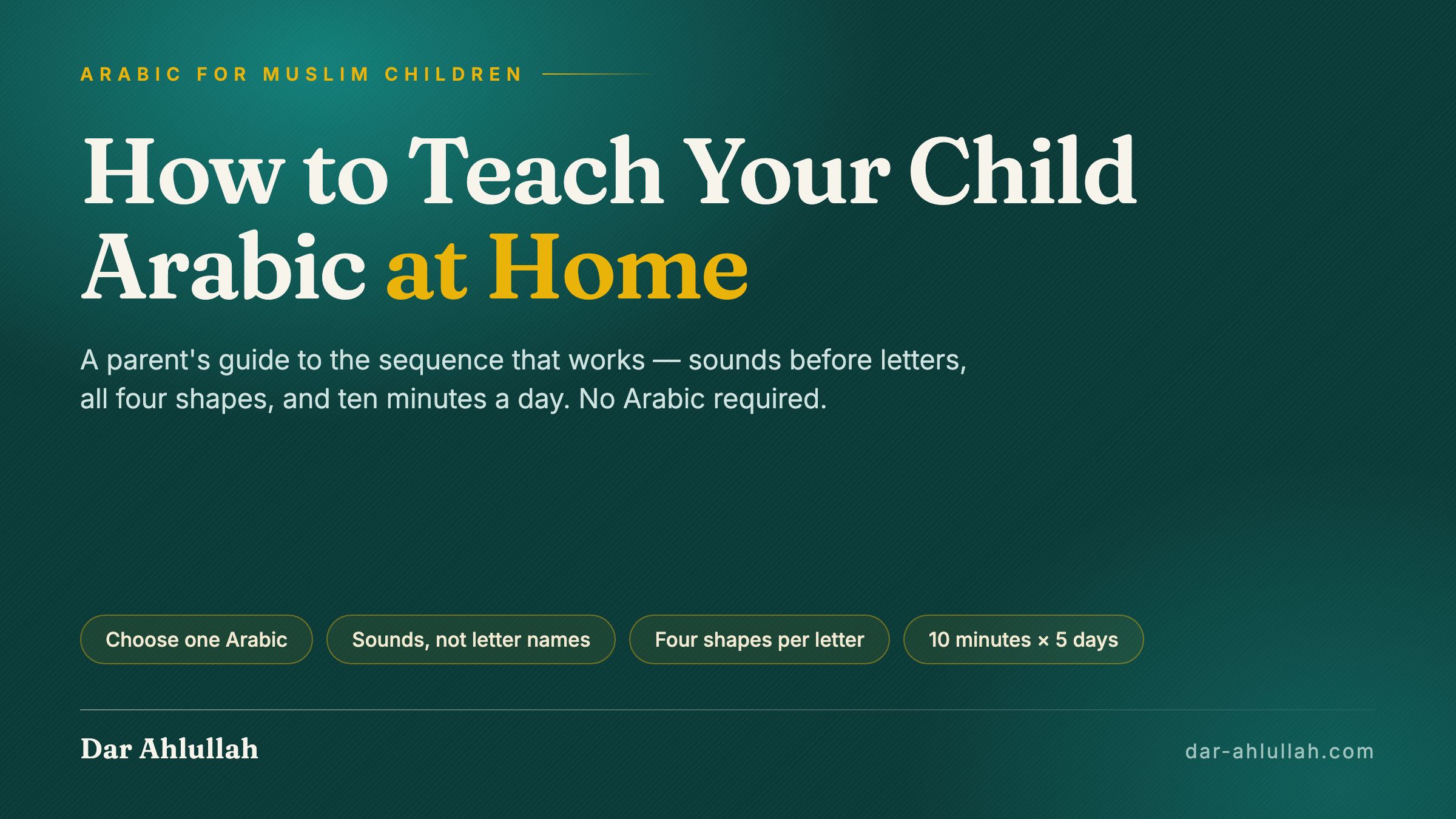
How to Teach Your Child Arabic at Home: A Parent's Guide

You do not need to speak Arabic to teach it at home. You need to pick which Arabic you are teaching, work in sounds before letters, and protect ten minutes a day — five days a week beats one long Saturday session.

20 min read

how to choose an online Quran academy

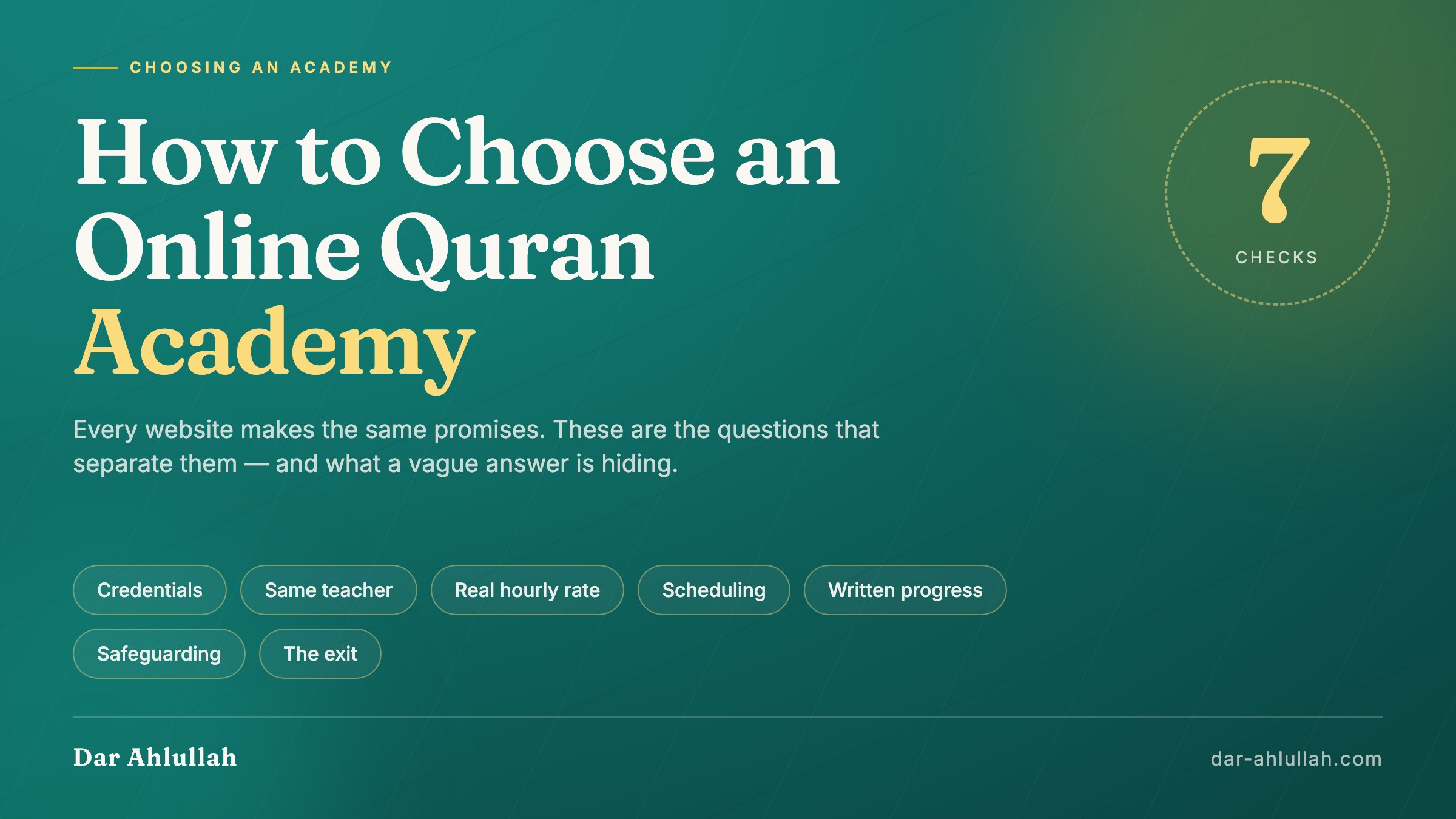
How to Choose an Online Quran Academy for Your Child

Every academy's website says the same six sentences. What separates them are the operational details nobody advertises: teacher continuity, the real hourly rate, clock changes, written progress, safeguarding, and the cancellation policy.

18 min read

new Muslim guide

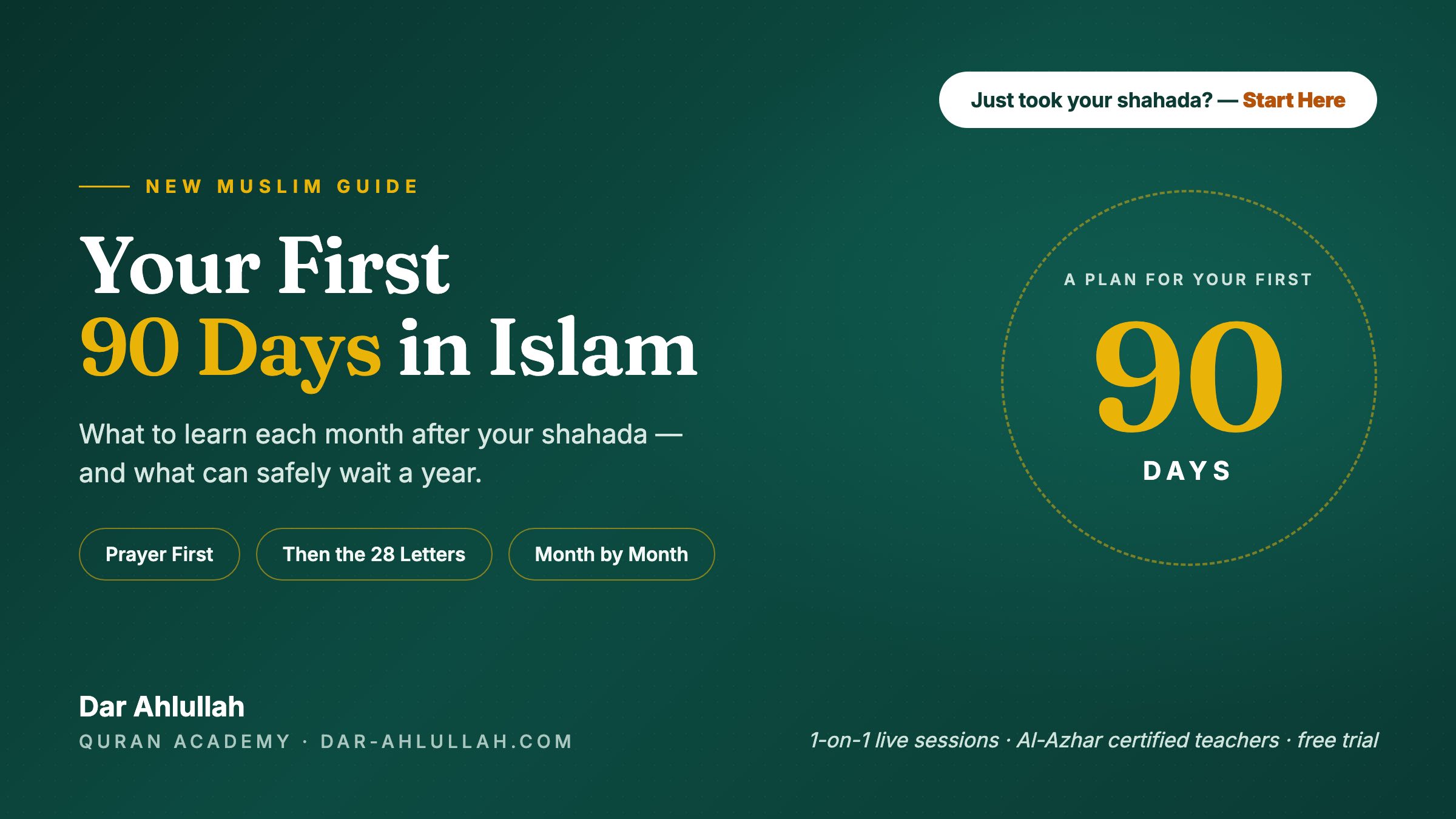
A New Muslim Guide to Your First 90 Days in Islam

The problem is never the amount to learn, it is the order. Here is a month-by-month sequence for the first 90 days after your shahada: prayer first, the 28 letters second, and what to deliberately postpone.

14 min read

online Quran classes cost

How Much Do Online Quran Classes Cost? (2026 Price Guide)

Online Quran classes cost anywhere from $10 to $100 a month — but the monthly price tells you almost nothing. Here are the real per-hour numbers, the hidden fees to check, and our full price list.

8 min read