
Learn wudu
Learn Wudu: Your Complete Guide to Purification for Prayer with Dar Ahlullah
Dar Ahlullah team 32 min read
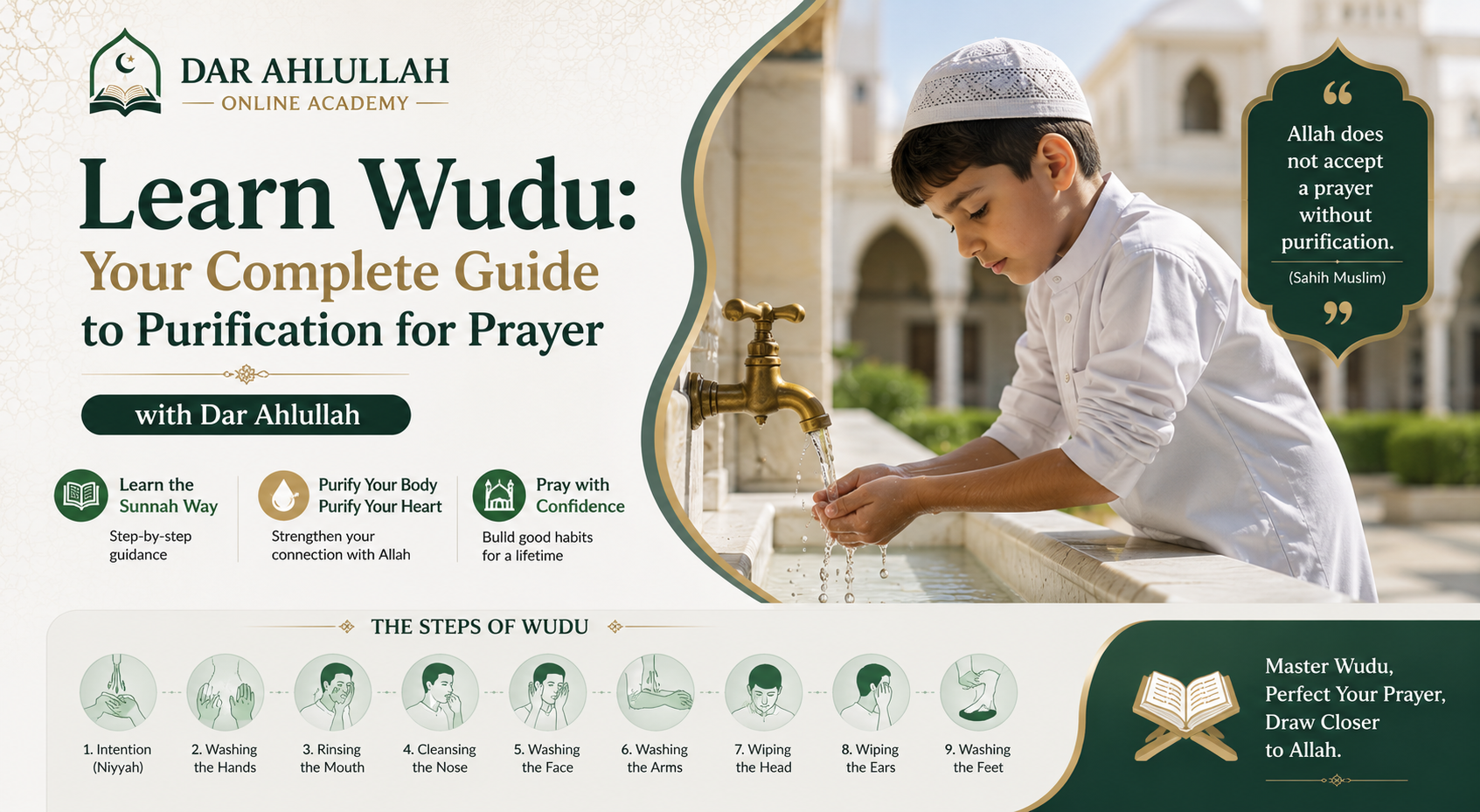
Have you ever wondered why Learn wudu is such a important and foundational practice for every Muslim? What if I told you that understanding and performing this essential purification ritual correctly can not only elevate your prayers but also bring a profound sense of peace and spiritual readiness to your daily life? At Dar Ahlullah, we believe that mastering wudu is the first step towards a deeper, more meaningful connection with your Creator. This complete guide will not only help you Learn wudu with clarity and confidence but also unveil the hidden blessings and benefits associated with each step. Are you ready to transform your prayer experience and embark on a journey of spiritual cleansing?
Table of Contents

Additionally, to help guide readers on their journey to master Wudu, this article begins with a clear overview. It is designed to be a complete resource for anyone looking to learn Wudu and deepen their spiritual practice.
- Introduction: Unlock Your Spiritual Purity – Learn Wudu with Dar Ahlullah
- Before You Begin: Essential Preparations to Learn Wudu
- How to Perform Wudu: A Step-by-Step Guide for Beginners
- Common Mistakes to Avoid When You Learn Wudu
- Beyond the Basics: Enhancing Your Wudu Practice
- Comparative Guide: Wudu Across Different Islamic Schools of Thought
- Learn Wudu Online with Dar Ahlullah: Your Path to Purity
- FAQ: Your Questions About Wudu Answered
- Key Takeaways: Master Your Wudu Practice
- Conclusion: Embrace Purity with Confidence – Learn Wudu Today!
This complete guide will walk readers through each important aspect of Wudu, starting with a foundational understanding.
Introduction: Unlock Your Spiritual Purity – Learn Wudu with Dar Ahlullah

The journey to spiritual purity begins with understanding the profound practice of Wudu. Indeed, Wudu, the ritual ablution performed before prayer, stands as a cornerstone of Islamic worship. It is far more than just washing; it's a sacred act that cleanses both the body and the soul, preparing a Muslim for an intimate connection with their Creator. Also, for those seeking to truly understand this vital purification, Dar Ahlullah offers exceptional resources to learn Wudu effectively.
What is Wudu and Its Significance in Islam?
Fundamentally, Wudu involves washing specific body parts in a prescribed manner using clean water. Spiritually, it signifies a purification from minor impurities, allowing a Muslim to stand before Allah in a state of cleanliness. As the Quran states, "O you who have believed, when you rise to [perform] prayer, wash your faces and your forearms to the elbows and wipe over your heads and wash your feet to the ankles." This verse highlights its divine imperative. What's more, beyond just preparing for Salah (prayer), Wudu is seen as a means of expiating sins and elevating spiritual status.[1]
Why Proper Wudu is Essential for Your Prayers
Ultimately, the validity of one's prayers is inextricably linked to the proper performance of Wudu. A prayer offered without correct Wudu is considered invalid, meaning its spiritual reward may not be attained. Therefore, to ensure that one's efforts in worship are accepted and richly rewarded, it is paramount to learn Wudu and perform it with precision and sincerity. Neglecting its rules can undermine the very foundation of one's Salah.
Meet Dar Ahlullah: Your Trusted Guide to Learn Wudu Online
Recognizing the need for accessible and accurate religious education, Dar Ahlullah provides an invaluable online platform for individuals to learn Wudu. With experienced instructors and a user-friendly interface, Dar Ahlullah makes mastering the intricate details of Wudu straightforward and engaging. They combine traditional wisdom with modern teaching methodologies, ensuring that every student gains a complete understanding. For more information on their offerings, consider visiting their Courses page.
With this foundational understanding established, the next step involves preparing physically and mentally to embark on the Wudu process.
Before You Begin: Essential Preparations to Learn Wudu
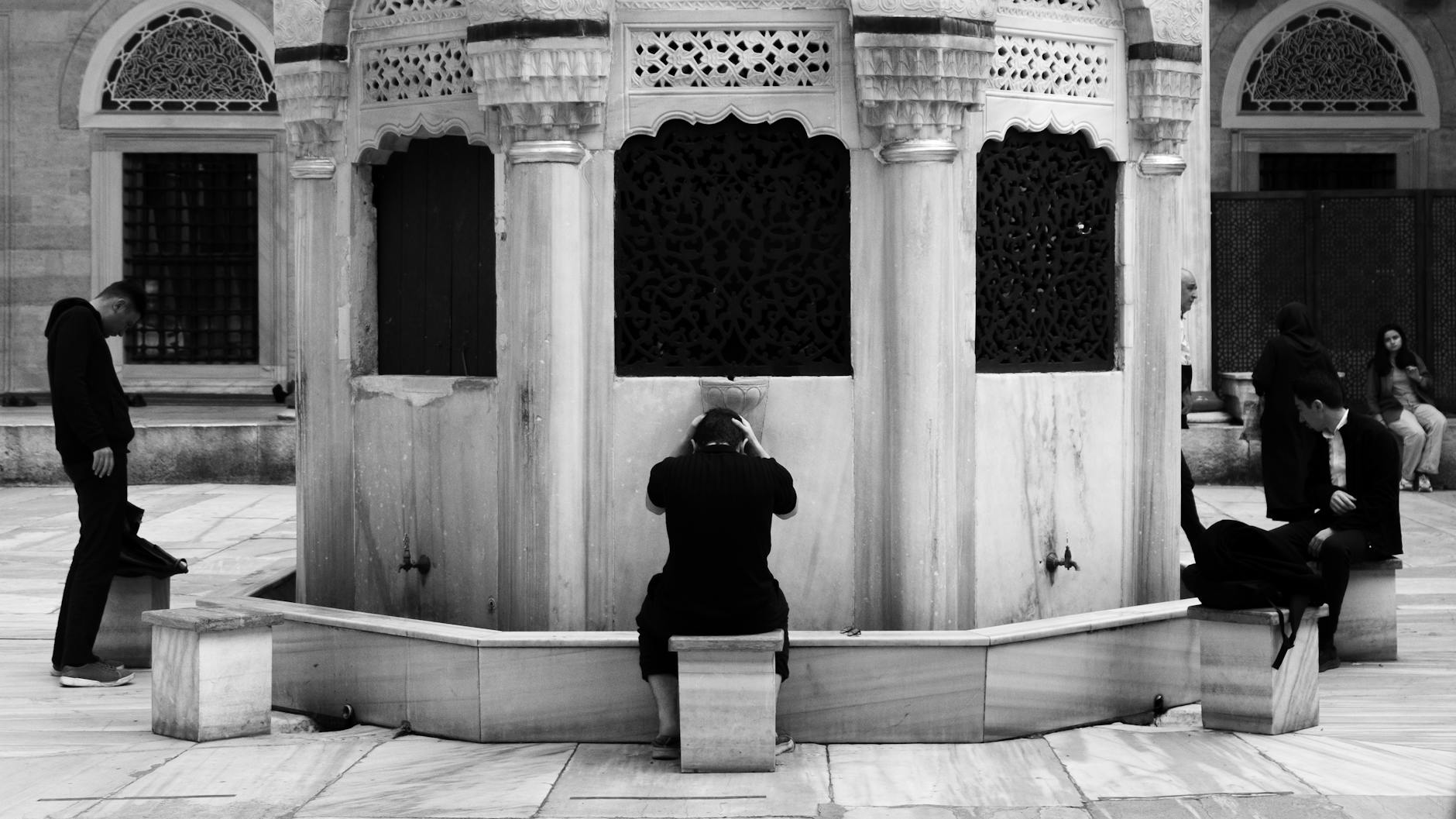
Also, before directly engaging in the physical acts of Wudu, a moment of preparation ensures the validity and spiritual efficacy of the purification. These preliminary steps are just as important as the washing itself, setting the stage for a devout and acceptable act of worship.
Gathering Your Supplies: Where to Perform Wudu
Initially, one must ensure a clean and suitable environment. The space where Wudu is performed should be free from impurities and provide enough room for comfortable movement. Importantly, access to clean, flowing water is essential. This could be a tap, a vessel of water, or even a natural source, provided the water is pure. Having a clean cloth or towel nearby for drying afterward is also practical.
Understanding the Intent (Niyyah) for Wudu
What's more, an indispensable aspect of Wudu is the Niyyah, or intention. While not verbally recited, the Niyyah is a firm resolve in the heart to perform Wudu for the sake of Allah, to remove impurity, and to prepare for prayer. Without this conscious intention, the physical acts of Wudu may not be considered valid. This mental commitment transforms a mundane washing into an act of worship.
Conditions for Valid Wudu: What You Need to Know
Also, several conditions must be met for Wudu to be considered valid. Grasping these is vital as you learn Wudu.
- Purity of Water: The water used must be pure (tahir) and not contaminated with impurities (najasa). For instance, water that has changed significantly in color, taste, or smell due to impurities cannot be used.
- Absence of Barriers: There should be no physical barrier preventing water from reaching the skin, such as nail polish, waterproof make-up, or stubborn dirt or glue.
- Sanity and Discernment: The person performing Wudu must be of sound mind and capable of understanding the act they are performing.
- Cessation of Impurity: Any act that necessitates Wudu (like passing wind, urinating, or defecating) must have ceased before beginning the ablution.
| Impurity Type | Impact on Wudu | Water Type | Suitability for Wudu |
|---|---|---|---|
| Minor Impurities (e.g., passing wind) | Breaks Wudu, requires re-performing | Pure (e.g., tap, rain) | Suitable |
| Major Impurities (e.g., post-menstrual) | Requires Ghusl (full bath), not just Wudu | Used (Musta'mal) | Not suitable (after major ritual purification) |
| Physical Impurities (e.g., dirt, paint) | Prevents water contact if not removed | Impure (Najis) | Not suitable |
With these essential preparations understood, one is now ready to explore into the precise, step-by-step actions of Wudu itself.
How to Perform Wudu: A Step-by-Step Guide for Beginners

In addition, with the necessary preparations complete, one can now embark on the beautiful and precise actions that constitute Wudu. This guide will help you to learn Wudu effectively, ensuring each step is performed correctly for a valid purification.[2]
-
Step 1: The Intention (Niyyah) and Saying 'Bismillah'
First, before any physical action, it is paramount to make a sincere intention (Niyyah) in one's heart to perform Wudu for the sake of Allah. This intention distinguishes Wudu from a mere washing. While not spoken aloud, one acknowledges the purpose. Following this, one should say "Bismillah ar-Rahman ar-Rahim" (In the Name of Allah, the Most Gracious, the Most Merciful) before beginning. Reciting Allah's name invokes blessings and purifies the intention further. Indeed, as the Prophet Muhammad (peace be upon him) said,
"Actions are but by intentions, and every man shall have but that which he intended." (Bukhari and Muslim)
-
Step 2: Washing the Hands (Three Times)
Next, wash both hands up to the wrists, ensuring water reaches between the fingers. This should be done three times, starting with the right hand. Many Muslims also use a pure, mild soap at this stage if their hands are visibly soiled, though this is not a mandatory part of ritual Wudu itself, but for general hygiene.
-
Step 3: Rinsing the Mouth and Nose (Three Times)
Subsequently, take water into the mouth and rinse it thoroughly, expelling the water. Repeat this three times. Afterward, cup water into the right hand, sniff it into the nose, and then expel it with the left hand. This too, is performed three times. This combined action is vital for internal cleanliness and purification.
-
Step 4: Washing the Face (Three Times)
Then, wash the entire face from the hairline to the chin, and from earlobe to earlobe. Ensure water reaches all parts, including the eyebrows and beard (if applicable). This step is repeated three times. Dar Ahlullah emphasizes the importance of thoroughness in this and all subsequent steps when you learn Wudu.
-
Step 5: Washing the Arms (Three Times, Up to the Elbows)
Following on, wash the right arm from the fingertips up to and including the elbow, three times. Take care to rub and ensure all surfaces are wet. Then, repeat this process for the left arm, also three times. The elbows must be fully covered by the wash for the Wudu to be sound.
-
Step 6: Wiping the Head (Once)
Next, wet both hands and then wipe over the head. This is done once, by placing wet hands at the front of the head and moving them backwards to the nape of the neck, and then bringing them forward again to the starting point. Women can wipe over a portion of their hair rather than the entire scalp.
-
Step 7: Wiping the Ears (Once)
Immediately after wiping the head, without re-wetting the hands, wipe the inside of both ears with the forefingers and the back of the ears with the thumbs. This is performed once. This interconnected action with wiping the head highlights efficiency in Wudu.
-
Step 8: Washing the Feet (Three Times, Up to the Ankles)
Finally, wash the right foot, including the ankle, three times, ensuring water reaches between the toes. This can be aided by using a pinky finger to rub between the toes. Then, repeat this for the left foot, also three times. Dar Ahlullah's Courses provide visual demonstrations for these intricate steps.
-
Step 9: Concluding Du'a (Supplication)
Upon completion of all physical actions, it is highly recommended to recite the following supplication: "Ash-hadu an la ilaha illallah, wahdahu la sharika lah, wa ash-hadu anna Muhammadan abduhu wa Rasuluh. Allahummaj'alni minat Tawwabina waj'alni minal Mutatahhireen." (I bear witness that there is no god but Allah alone, without any partner, and I bear witness that Muhammad is His servant and Messenger. O Allah, make me among those who repent and make me among those who purify themselves.) This concludes the spiritual purification.[3]
Mastering these steps is important, but it's equally important to be aware of common pitfalls that can diminish the effectiveness of one's Wudu.
Common Mistakes to Avoid When You Learn Wudu
Building on this, even with a thorough step-by-step guide, certain mistakes can unintentionally undermine the purification process. Recognizing and correcting these errors is a significant part of learning to learn Wudu perfectly. Dar Ahlullah, through its structured learning, helps individuals navigate these challenges.
Insufficient Washing: Ensuring All Areas Are Covered
A common oversight occurs when individuals do not ensure that water reaches every part of the prescribed body parts. For example, neglecting the back of the heel, under the chin, or between the fingers can invalidate Wudu. The skin of the entire area designated for washing must be touched by water. Consider, for instance, a study published in the Journal of Infection and Public Health, which, while not directly about Wudu, emphasizes thorough hand washing for germ removal, a principle that spiritually applies to Wudu – no patch should be left dry. When you learn Wudu, meticulousness is key.
Table 1: Common Unwashed Areas in Wudu
| Body Part | Common Overlooked Area | Impact on Wudu |
|---|---|---|
| Hands | Between fingers, underneath rings | Incomplete purification |
| Face | Around ears, under chin, edges of beard (if dense) | Wudu potentially invalid |
| Arms | Elbow crease, back of arm | Impermissible for prayer |
| Feet | Between toes, heel, sole | Purity compromised |
Using Too Much Water: The Importance of Conservation
Another prevalent mistake is the wasteful use of water during Wudu. Islam strongly discourages extravagance (Israf), even in acts of worship. The Prophet Muhammad (peace be upon him) himself used very little water for Wudu. Therefore, while thoroughness is essential, excessive water usage is not. Dar Ahlullah advises learners to practice Wudu with mindfulness, aiming for efficiency without compromising coverage. This balance is critical to truly learn Wudu in its entirety, encompassing both the physical and ethical dimensions.
"Do not exceed the measure of two handfuls [of water] (for ablution)." (Ibn Majah)This prophetic guidance highlights the emphasis on moderation.
Skipping Steps: Understanding the Fard (Obligatory) and Sunnah (Recommended)
Crucially, some individuals might inadvertently skip certain steps or misunderstand their importance. In Wudu, there are 'Fard' (obligatory) acts, without which the Wudu is invalid, and 'Sunnah' (recommended) acts, which enhance the reward and completeness of Wudu but their omission does not invalidate it. Dar Ahlullah’s complete guidance helps distinguish these, ensuring that no obligatory step is missed. When you learn Wudu, grasping this distinction is foundational.
Obligatory (Fard) Acts of Wudu:
- Making the intention (Niyyah).
- Washing the face completely.
- Washing both arms up to and including the elbows.
- Wiping over at least a quarter of the head.
- Washing both feet up to and including the ankles.
- Maintaining sequential order.
Conversely, using a miswak, rinsing the mouth and nose (unless the face wash is counted as part of it), or washing each limb three times are considered Sunnah. Learning these nuances is key to a strong Wudu practice. For more detailed insights, one might consult resources like IslamQA.info for scholarly explanations on Wudu prerequisites. To explore deeper into understanding this, consider exploring Dar Ahlullah's About Us page to see their approach to Islamic education.[4]
By rectifying these common errors, one can perform Wudu more effectively, opening the door to understanding its deeper, more enriching aspects.
Beyond the Basics: Enhancing Your Wudu Practice
Once the fundamentals of performing Wudu correctly and avoiding common errors are grasped, one can explore into further nuances that enhance its spiritual value and practical application. Learning Wudu effectively involves understanding not just the obligatory acts, but also the recommended practices that elevate one's purification and reward.
Sunnahs of Wudu: Maximizing Your Rewards
Beyond the essential Fard (obligatory) acts, numerous Sunnah (recommended) actions enrich the Wudu experience and attract greater blessings. Incorporating these not only deepens the spiritual connection but also exemplifies adherence to the Prophet Muhammad's (peace be upon him) practice. Dar Ahlullah's blog often delves into these details, helping individuals to learn wudu comprehensively.
- Saying Bismillah: Commencing Wudu by saying "Bismillahir Rahmanir Raheem" (In the name of Allah, the Most Gracious, the Most Merciful) invokes divine blessings and consciousness.
- Using Siwak/Toothbrush: Cleaning the teeth with a Siwak or toothbrush before Wudu is highly recommended. The Prophet Muhammad (PBUH) said, "If I had not found it a hardship for my Ummah, I would have commanded them to use the Siwak with every Wudu." (Sahih Muslim).
- Washing Hands Three Times: Washing both hands up to the wrists three times at the very beginning, before rinsing the mouth and nose.
- Rinsing Mouth and Nose Thoroughly: Performing madmada (rinsing the mouth vigorously) and istinshaq (sniffing water into the nose) three times each, and using the left hand to clear the nose.
- Wiping the Entire Head: While some schools consider wiping part of the head obligatory, wiping the entire head from front to back and then front again is a Sunnah.
- Running Fingers Through Beard and Toes: Ensuring water reaches all parts by running wet fingers through a thick beard and between the toes.
- Reciting Duas: Specific supplications can be recited before, during, and after Wudu, such as the Shahadah (testimony of faith) after completion.
What Breaks Wudu: Invalidators and How to Maintain Purity
To preserve one's state of purity for prayer and other acts of worship, it is important to understand what actions nullify Wudu. Neglecting to learn wudu's invalidators can lead to performances of prayer that are not accepted.
- Discharge of anything from the private parts: This includes urine, faeces, gas, and seminal fluid (though the latter typically necessitates Ghusl).
- Deep sleep or unconsciousness: If one falls into a sleep so deep that they are no longer aware of their surroundings, Wudu is broken. Partial slumber, where awareness is maintained, generally does not invalidate it.
- Loss of sanity: Due to madness, fainting, or intoxication.
- Contact with a non-mahram (unmarriageable kin) of the opposite sex: Some schools of thought consider direct skin-to-skin contact with a non-mahram of the opposite sex to nullify Wudu.
- Touching the private parts directly with the palm: If one touches their own or another's private parts without a barrier.
- Vomiting profusely: While minor vomiting does not always break Wudu, a full mouth-full often does.
- Eating camel meat: This is a specific ruling in the Hanbali school of thought.
Tayammum: The Alternative Purification When Water is Unavailable
Almighty Allah, in His infinite mercy, has provided an alternative for purification when water is scarce, inaccessible, or harmful to use. This alternative is called Tayammum, purification with clean earth or dust. Learning Wudu also encompasses understanding its permissible alternatives.
"And if you are ill or on a journey or one of you comes from the place of relieving himself or you have contacted women and find no water, then seek clean earth and wipe over your faces and hands [with it]. Indeed, Allah is ever Pardoning and Forgiving."
(Quran 4:43)
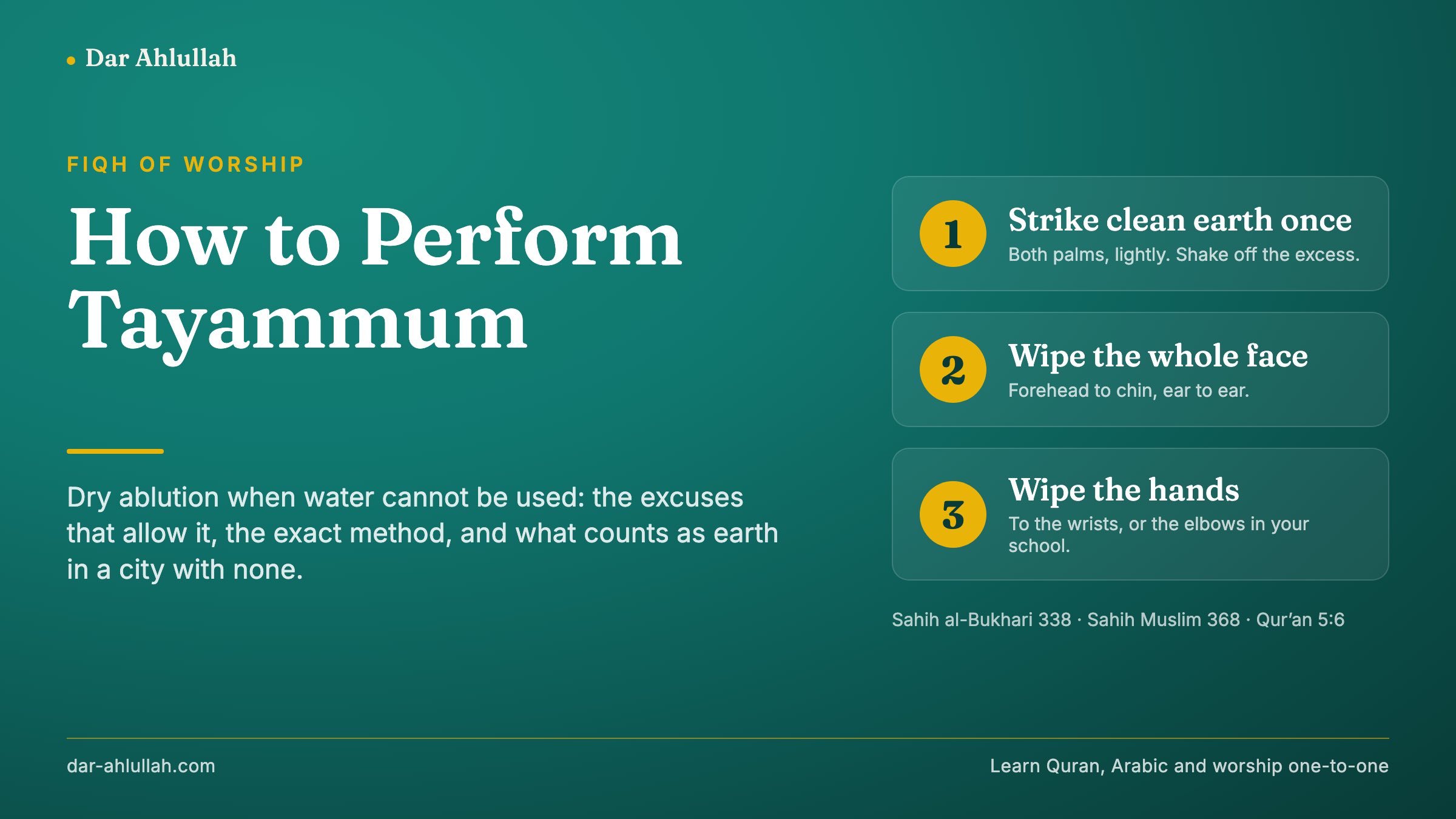
Tayammum involves striking the palms lightly on clean earth or dust once, wiping the face, and then striking again to wipe the hands up to the wrists. It is a simplified form of purification that serves the same purpose as Wudu in specific circumstances, and it is the standard concession relied upon by travellers and by those whose medical condition makes contact with water harmful.
When to Perform Ghusl (Full Body Wash) vs. Wudu
While Wudu is a partial ablution, Ghusl is a full-body ritual purification, set out step by step in our guide to how to perform ghusl. To completely learn wudu and purification rules, one must differentiate between these two. Ghusl is obligatory in several situations:
- After sexual intercourse (even without ejaculation).
- After ejaculation (due to wet dreams or other causes).
- After menstruation for women.
- After childbirth (post-natal bleeding, Nifas).
- Upon embracing Islam (for a new convert).
As one explores these advanced aspects of Wudu, it's also valuable to recognize that not all Wudu is performed identically across the rich tapestry of Islamic jurisprudence.[5]
Comparative Guide: Wudu Across Different Islamic Schools of Thought
Given the richness of Islamic tradition, it's insightful to recognize that while the core principles of Wudu remain universal, certain methodological differences exist across various schools of thought. Understanding these nuances helps to learn wudu within its broader Islamic context. These variations are often due to different interpretations of Prophetic traditions and the Quranic verses, showcasing the flexibility and depth of Islamic law. Dar Ahlullah ensures that students who learn wudu understand the school of thought they choose to follow.
Table 1: Key Differences in Wudu Practices
Below is a comparative overview of some key differences in Wudu practices among the four main Sunni schools of thought:
| Aspect of Wudu | Hanafi School | Maliki School | Shafi'i School | Hanbali School |
|---|---|---|---|---|
| Intention (Niyyah) | Sunnah (recommended) | Fard (obligatory) | Fard (obligatory) | Fard (obligatory) |
| Wiping the Head | At least ¼ of the head (Fard) | Entire head (Fard) | At least a small portion (Fard) | Entire head (Fard) |
| Washing Feet Order | After hands (in sequence) | After hands (in sequence) | After wiping head (in sequence) | After wiping head (in sequence) |
| Sequence (Tartib) | Sunnah | Fard | Fard | Fard |
| Continuity (Muwalat) | Sunnah | Fard (must dry quickly) | Sunnah | Fard (must dry quickly) |
| Rubbing Limbs (Dalk) | Sunnah | Fard | Sunnah | Sunnah |
| Touching Women | Does not invalidate (if without desire) | Does not invalidate | Invalidates (even without desire) | Invalidates (if with desire) |
Learn Wudu Online with Dar Ahlullah: Your Path to Purity
For those inspired to deepen their understanding or begin their journey of purification, Dar Ahlullah offers a uniquely structured and supportive online environment to master Wudu. To learn wudu effectively, convenience, expert guidance, and community are paramount.
Benefits of Our Online Wudu Lessons for Adults
Dar Ahlullah's online platform is designed with the modern learner in mind, making it easier than ever to learn wudu regardless of one's location or schedule.
- Convenience and Flexibility: Access self-paced video lessons and interactive modules anytime, anywhere. Our courses fit into even the busiest schedules.
- Expert-Led Instruction: Learn from qualified instructors who provide clear, complete explanations and demonstrations, ensuring accurate understanding.
- Visual Learning Aids: Benefit from high-quality videos and animated graphics that break down each step of Wudu, making complex actions easy to follow.
- Personalized Feedback: Submit video recordings of your Wudu practice for personalized feedback, helping to refine your technique and correct any mistakes.
- In-Depth Curriculum: Beyond the mechanics, the curriculum delves into the spiritual significance, Sunnahs, and common jurisprudence points, allowing you to learn wudu holistically.
- Progress Tracking: Monitor your learning journey with built-in tools that help you see your development and mastery of Wudu.
Joining the Dar Ahlullah Wudu Academy Community
Beyond the lessons, Dar Ahlullah fosters a vibrant online community, understanding that spiritual learning thrives in a supportive environment. When you learn wudu with us, you join a network of like-minded individuals. Engage in discussions, share experiences, and receive encouragement from peers and instructors alike. This communal aspect strengthens resolve and enriches the learning experience, creating a sense of belonging among students worldwide.
FAQ: Your Questions About Wudu Answered
As individuals progress in their understanding and practice of Wudu, practical questions often emerge, requiring clear and concise answers. Dar Ahlullah understands these common inquiries, helping individuals to confidently learn wudu and maintain their purity.
Q1: Can I make wudu if I have a wound or cast?
A: Yes, generally. If washing the wound or cast area would cause harm or delay healing, one should perform Wudu as usual for the healthy parts. For the injured area, masah (wiping) over the cast, bandage, or wound is permissible, provided it does not cause further harm. If even wiping is detrimental, that particular limb can be skipped. The Prophet (PBUH) allowed wiping over splints and bandages. (Sunan Abu Dawud).
Q2: Is it necessary to say the intention for wudu out loud?
A: No, the intention (Niyyah) for Wudu is primarily a matter of the heart. It is the conscious decision to perform Wudu for the sake of Allah. While some Muslims may voice their intention, it is not obligatory and holds no additional reward. The important aspect is the sincerity and awareness in one's heart. This is a common point emphasized when you learn wudu.
Q3: What if I forget a step in my wudu?
A: If you realize you forgot a step *during* Wudu, simply go back and perform that forgotten step and all subsequent steps. If you remember *after* completing Wudu and before prayer, you must perform the forgotten step and any subsequent steps. If you remember *after* prayer, your prayer is invalid, and you must repeat Wudu and the prayer — see how to pray in Islam for the full sequence. Knowing these rules is important when you learn wudu.
Q4: How long does wudu last?
A: Wudu lasts until it is invalidated by one of the actions mentioned earlier (e.g., passing gas, urination, deep sleep). There is no specific time limit for Wudu; it remains valid as long as no invalidating factors occur. Many scholars advise renewing Wudu for each prayer to gain extra reward, though it's not obligatory if your previous Wudu is still valid.
Q5: Can I perform wudu with cold water?
A: Yes, absolutely. There is no prohibition against using cold water for Wudu, provided it is clean and pure. In fact, enduring slight discomfort for the sake of Allah, such as using cold water in winter, can carry additional reward, as mentioned in some prophetic narrations which encourages making Wudu despite difficulties.
Q6: What is the ruling on wiping over socks (Khuffain) instead of washing feet?
A: Wiping over socks (known as 'masah alal khuffain') is a Divinely legislated concession in Islam. It is permissible to wipe over leather socks or thick socks that cover the ankles for a specific period (24 hours for a resident, 72 hours for a traveler) after performing Wudu once and putting them on in a state of purity. This concession makes it easier to maintain purity, especially in cold weather or during travel. This is an advanced topic many find useful when they learn wudu.[7]
Q7: Is it permissible to use hand sanitizer before wudu?
A: Generally, yes. Most hand sanitizers contain alcohol, and Islamic scholars have differing opinions on its purity for ritual purposes. However, the majority modern view for practical application is that since the alcohol in sanitizers is denatured and not for intoxicant purposes, it does not invalidate Wudu or prevent its performance. The primary concern is that the hands are clean of physical impurities. Therefore, using hand sanitizer before Wudu to clean your hands is widely accepted.
With these common questions clarified, the most critical aspects of Wudu can be summarized for immediate retention and application.
Key Takeaways: Master Your Wudu Practice
Having explored every facet of Wudu, from its foundational significance to practical execution and common queries, it's beneficial to consolidate the most vital points for lasting retention. These takeaways serve as a reminder for anyone looking to truly learn wudu and integrate it into their daily lives.
Wudu is a fundamental act of worship and purification.
At its core, Wudu is more than just washing; it's a spiritual preparation, a prerequisite for prayer, and a means of drawing closer to Allah. It cleanses both the body and the soul.
Following the steps precisely ensures valid prayers.
The validity of one's prayer hinges on the correct performance of Wudu. Understanding and executing each Fard (obligatory) step accurately is important for the acceptance of one's acts of worship. This precision is emphasized throughout the 'learn wudu' journey.
Understanding the Fard and Sunnah enhances your reward.
While the obligatory acts ensure validity, incorporating the Prophetic Sunnah acts elevates the spiritual benefit and reward of Wudu. Striving to perfect both aspects demonstrates a deeper commitment.
Dar Ahlullah provides complete online resources to learn wudu.
For individuals seeking accessible, expert-led, and flexible learning experiences, Dar Ahlullah stands as a premier platform. It offers the tools and community needed to master Wudu confidently. To explore their offerings, visit their homepage.
Consistency and correct knowledge are key to effective wudu.
Regular practice combined with a sound understanding of its rulings ensures that Wudu becomes a natural and impactful part of one's daily routine. Continuous learning and refinement are encouraged.
Always strive for sincerity and focus (khushu) during wudu.
Beyond the physical acts, the spiritual essence of Wudu lies in one's intention and mindfulness. Cultivating khushu (humility and concentration) during Wudu transforms it into a truly purifying and rewarding experience.[8]
Embracing these key takeaways reinforces the importance of Wudu, guiding individuals towards confidently integrating this purification into their daily lives with Dar Ahlullah's continued support.
Conclusion: Embrace Purity with Confidence – Learn Wudu Today!
The journey of learning Wudu is a profound step towards spiritual purity and a deeper connection with one's faith. As seen throughout this guide,Wudu is not merely a ritual washing but a sacred preparation, essential for valid prayers and spiritual elevation. Its proper execution, from understanding its obligatory acts to embracing the recommended sunan, enriches one’s devotional life.
Recap of the Importance of Wudu in Islam
Indeed, a well-performed Wudu is the cornerstone of every Muslim's prayer. Islamic scholars consistently emphasize its significance, often linking spiritual cleanliness with inner peace. It is also one of the most common things Muslims revisit and refine long after childhood, because small details are easy to let slip in daily practice.
"Purity is half of faith." - Prophet Muhammad (peace be upon him)
Your Next Steps to Learn Wudu Effectively
To truly master this vital purification, consider these actionable steps:
- Revisit the Basics: Review the Dar Ahlullah blog for clear, step-by-step instructions.
- Practice Consistently: Integrate the correct Wudu steps into your daily routine.
- Seek Guidance: Don't hesitate to ask teachers for clarification on specific issues.
Join Dar Ahlullah and Perfect Your Purification
At Dar Ahlullah, an accessible and complete platform awaits to help you learn Wudu thoroughly. With expert instructors and user-friendly resources, achieving proficiency in Wudu is within reach. Dar Ahlullah eagerly awaits to guide each individual on this sacred path, ensuring a confident and correct Wudu practice for life. Enroll now and transform your prayers!
| Aspect of Wudu | Importance | Dar Ahlullah's Role |
|---|---|---|
| Obligatory Acts | Foundational for Validity | Detailed instruction, practical demonstration |
| Recommended Acts | Enhances Reward | Guidance on sunan and adab |
| Common Mistakes | Prevents Errors | Identification and correction techniques |
Conclusion
Mastering wudu, the ritual purification, is a fundamental and spiritually enriching aspect of a Muslim's devotion. This guide has illuminated each step, from the initial intentions to the final declarations, ensuring you can confidently perform your prayers. Remember, wudu is not merely a physical washing but a spiritual preparation, cleansing both body and soul. Dar Ahlullah is committed to supporting your spiritual journey. Continue to practice diligently, and may your purified prayer bring you closer to Allah (SWT).
FAQ
- What is wudu?
- Wudu is the Islamic ritual purification performed before prayers (Salat) or touching the Quran.
- Why is wudu important?
- Wudu is a prerequisite for the validity of prayer and is considered a spiritual cleansing, enhancing devotion.
- How many steps are there in wudu?
- There are typically four obligatory (fard) steps, with many additional recommended (sunnah) practices.
- Can I perform wudu with cold water?
- Yes, wudu can be performed with any clean, permissible water, regardless of its temperature.
- What nullifies wudu?
- Wudu is nullified by passing gas, urinating, defecating, deep sleep, and bleeding, among other things.
- Do I need to make a specific intention for wudu?
- Yes, a sincere intention (niyyah) to perform wudu for Allah's sake is essential.
Sources & References
- Wudu - Wikipedia (en.wikipedia.org) — This Wikipedia page provides a complete overview of Wudu, detailing its theological foundations, various schools of thought regarding its performance, and related Islamic jurisprudence. It explains the ritual purification process and its significance in Islamic practices.
- Wudu - Noor Path (noor-path.com) — This page from Noor Path offers a guide on how to perform Wudu. It likely covers the steps involved in the ablution process, making it accessible for individuals seeking to understand and practice Wudu correctly.
- Wudu Guide & Importance (elfurqanacademy.com) — Elfurqan Academy provides a guide on Wudu, emphasizing its steps and importance within Islamic practice. This source would explain why Wudu is a prerequisite for prayer and other acts of worship.
- How to Perform Wudu Correctly: A Complete Step-by-Step Guide (hopewelfaretrust.org) — Hope Welfare Trust offers a thorough, step-by-step guide on performing Wudu correctly. This resource is designed to help individuals learn the precise method of ablution required before prayer.
- Khutbah: Wudu: The Ablution of Fiqh, Rules, Purification and Blessings (muslimmatters.org) — This article from Muslim Matters delves into Wudu from a fiqh (Islamic jurisprudence) perspective, covering its rules, the purification aspects, and the blessings associated with it. It likely offers a deep understanding of the ritual beyond just the steps.
- Wudhu: A Beginner’s Guide to Islamic Purification and Prayer (deenin.com) — Deenin.com presents a beginner's guide to Wudhu, focusing on its role in Islamic purification and prayer. This source aims to simplify the process for new learners, covering essential steps and significance.
- What Is Wudu? Islamic Ablution Guide (islamonline.net) — IslamOnline.net provides a guide explaining what Wudu is and detailing the Islamic ablution process. It serves as an informative resource for understanding the ritual's basics and importance.
- How to do Wudu - My Islam (myislam.org) — My Islam offers clear instructions on how to perform Wudu. This resource focuses on practical application, guiding users through each stage of the ritual ablution.
Related articles
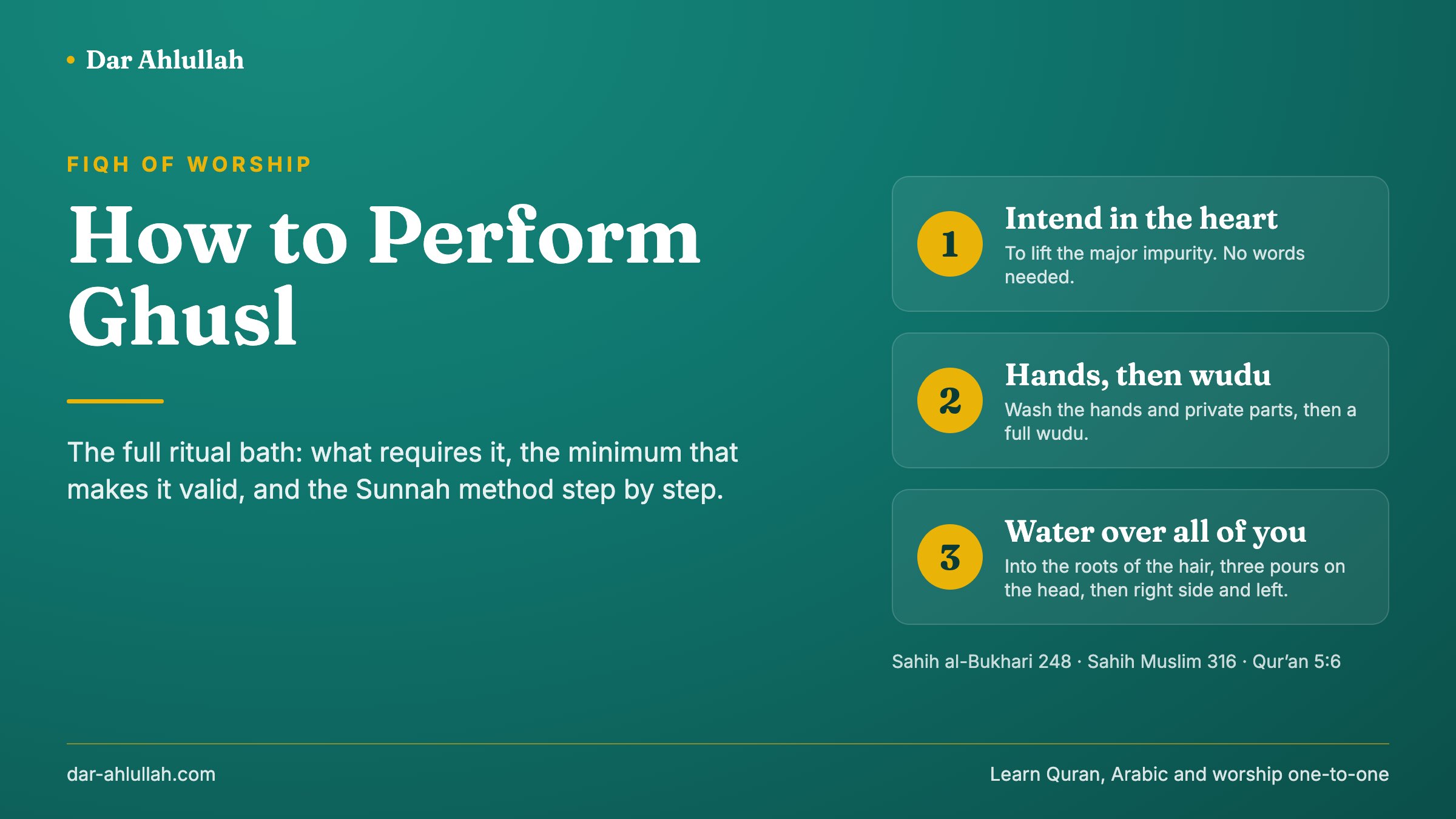
how to perform ghusl
How to Perform Ghusl: The Full Ritual Bath, Step by Step
Ghusl is the full ritual bath, owed after intercourse, after any emission of sexual fluid, and at the end of menstruation and postnatal bleeding. Its real requirements are fewer than most people fear: an intention and water over the whole body, with two schools adding the mouth and nose and one adding rubbing. This guide sets out the minimum, the Sunnah method, where the four schools differ, and whether your morning shower can be your ghusl.
24 min read
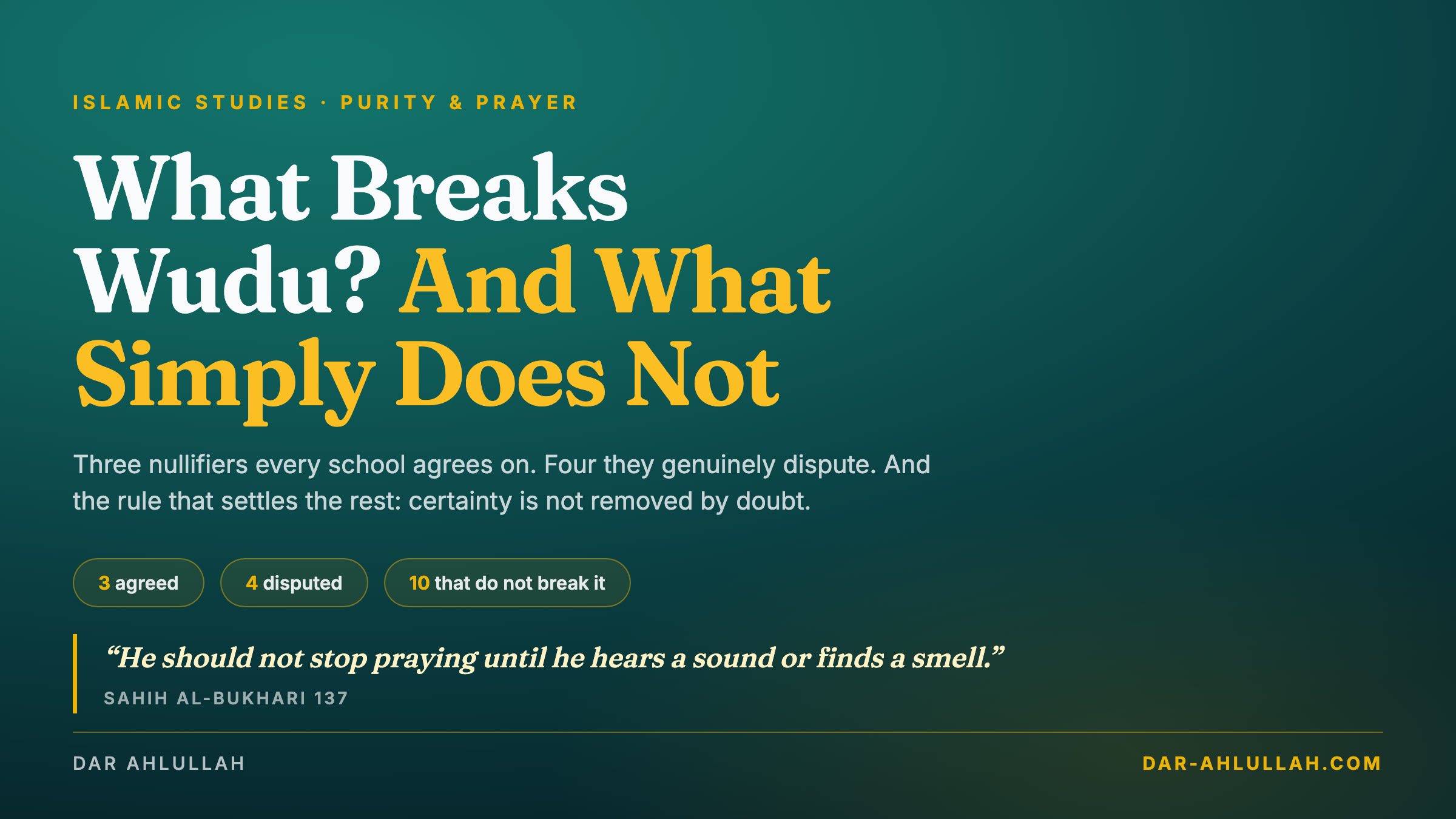
what breaks wudu
What Breaks Wudu? The Agreed List and the Disputed
Three things break wudu by the agreement of all four schools. Four more are genuinely disputed, and your answer depends on which school you follow. Almost everything else people worry about — food, dirt, a nosebleed, a doubt — does not break it at all.
19 min read
how to perform tayammum
How to Perform Tayammum: Dry Ablution When You Cannot Use Water
Tayammum is the purification you make with earth when water cannot be used. The rule is short: strike clean earth, wipe your face, wipe your hands. The difficulty for a Muslim in Europe or America is everything around the rule: what counts as a real excuse, what counts as earth in a building with none, how long it lasts, and what you do on a plane or in a hospital bed when there is neither water nor dust.
28 min read